defrog: (puzzler)

It’s been 25 years since 9/11.

And in all that time, I have never once posted anything about my personal experience on that day.

For one thing, there was no such thing as blogging or social media in 2001, children.

Once we had both, it seemed like everyone posted their 9/11 memories on each anniversary – except me. I figured if everyone else was doing it, there was no point in me adding to the noise, especially as I wasn’t in NYC at the time and didn’t know anyone who was killed in the attacks. And besides, I’ve never been one to go for obvious low hanging fruit when looking for stuff to post.

Which is not to say I didn’t post anything on 9/11 anniversaries – just not my personal experience.

Well, I have now on Bluesky, and I’ll post it here too.

Anyway.

I happened to be in Campbell, California that week on a press tour. On 9/11, I was woken up at 6:55am local time by a call from my bride in Hong Kong telling me America was being attacked in multiple cities, and wanted to know if I was okay.

I turned on the cable TV and spent the next 24 hrs being generally stunned and full of dread. The same was true for the other journos and PR people on the same junket. We talked about it a lot, and of course we were shocked, but we all dreaded what would happen next in terms of Bush Jr’s response.

I have three distinct memories of that day:

1. I walked into a Trader Joe's near the hotel to stock up on snacks, since I was going to be staying longer than I thought. I was wandering the aisles listening to Republicans on news radio demonising all Muslims and demanding war. It wasn't hard to see that the Bush II admin was prepared to run with that line, in terms of Islamophobia, war and civil liberties in general. Of course we didn't know how bad it would get, but it's fair to say that everything that's happened since 9/11 is what made the Trump Dynasty possible.

2. I flipped channels a lot (even ESPN and The Weather Channel were covering it), but I mostly watched CNN, because Fox News was noticeably the loud "we'll report any rumour no matter what" option. (Note: I wasn’t familiar with Fox News at the time, and this was before they went full Republican Propaganda Network, though perhaps that’s where it all started.)

3. I was originally supposed to fly back to HK on 9/12. Naturally my flight was cancelled with all the others, and it took me until Saturday (9/15) to rebook a seat. I will say Singapore Airlines handled it pretty well under the circumstances and their comms was quite good.

Anyway, those are the highlights of what I remember.

Why post them now?

I guess partly because of a Bluesky post I came across showing screencaps of a post on X by “Brain Leakage” [@BrainLeakage03] responding to someone on Twitter who said they didn’t get why ppl above a certain age were all “weird and worshipful” about 9/11.

Which raised the point that enough time had passed that there were scores of young ppl online who were born after 9/11, and thus for them it was just another history date, the same way us Gen Xers thought about Pearl Harbor or the Kennedy assassination when we were in our 20s.

Anyway, here’s what “Brain Leakage” wrote in response, which I think gets to the heart of it.

Since you weren't even born yet, I'm going to answer in good faith:

9/11 was America's collective loss of innocence. In the decades prior, we'd won the Cold War by outspending the Soviets. We were the sole remaining superpower, and we were in a period of peace and economic prosperity.

Then, seemingly out of nowhere, we suffered a suicide attack with a higher death toll than Pearl Harbor. It struck a city on the US mainland, the first attack of that scale to hit CONUS since the Civil War.

In a violent flash, and on live television, our collective illusions of safety, security, and peace disappeared. For most Americans, it was the first time we ever had to contend with that scale of horror, and what it implied about the fragility of our way of life.

It was simultaneously sobering and terrifying. The American response was to launch two wars, and to restructure domestic life around the Government's presumed duty to spy on everyone, so nothing like it could ever happen again.

I am not being hyperbolic when I say the America we grew up in-imagined or not-vanished on 9/11.

What you're calling a "worshipful attitude" is a mix of reverence for the dead, and mourning for the loss of what existed before.

Never forget,

This is dF

defrog: (books)
Some quick reads this month to keep the momentum going. It’s all about strategy, see? Sure it is.

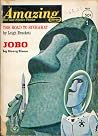
The Road to SinharatThe Road to Sinharat by Leigh Brackett

My rating: 4 of 5 stars

Continuing my exploration of the works of Leigh Brackett, this 1963 novella is set on the same version of Mars as her Eric John Stark stories, in that it features the ancient island city of Sinharat, a place now considered taboo because it used to be the home of the Ramas cult, who used to practice immortality by transplanting the minds of elders into (unwilling) younger bodies. Both Sinharat and the Ramas cult were backdrops in the first EJS novella, Queen of the Martian Catacombs: Planet Stories, Summer '49, but contrary to the Goodreads tag, this is not a EJS story – Stark doesn’t appear at all, and it’s not clear where in the EJS timeline this story fits. Then again, it arguably doesn’t matter.

The protagonist this time is Dr Matthew Carey, a Martian archaeologist who works for the Rehabilitation Project, an Earth-led initiative to terraform Mars from an arid desert to a rich planet with farmable soil, plenty of water and modern cities and power. The native Martians don’t want it, but they’re getting it anyway, which has led to uprisings. Carey’s field work has led him to join the Martian side, and he is now on the run from Interpol after sabotaging the project. He plans to make a dangerous journey to Sinharat, where he believes ancient documents will show why the Martians are so opposed to change and convince Earth to abandon the project.

Of all the Brackett planetary romance stories I’ve read so far, this one is the best of the bunch – possibly because it’s less about the feudal swords-and-sorcery tropes and more of a straight adventure story, with Carey joined by his trader friend Derech and his girlfriend Arrin on the road to Sinharat whilst being chased by Interpol detective Howard Wales. The anti-colonialism angle also appeals to me, partly because of current events on Earth, and partly because it kicks hard against the Golden Age SF standard of manly imperialist conquest for the good of the “primitive” natives, and takes the point of view of the latter into consideration. Nicely done.


Three John Silence Stories (John Silence #1)Three John Silence Stories by Algernon Blackwood

My rating: 1 of 5 stars

If I ever read Algernon Blackwood before, it might have been in some ghost/horror anthology. Anyway, I sort of knew the name, and that his tales of the weird and supernatural are credited with influencing the likes of HP Lovecraft. He’s also credited with pioneering the “occult detective” genre, which brings us to this collection of three stories starring Dr John Silence, a physician with psychic training who takes on cases with apparent supernatural characteristics. His name alone convinced me to try it.

Blackwood’s collection of six John Silence stories have been published in a few different versions – this volume, as the title suggests, contains the first three stories: “A Psychical Invasion”, which involves a writer of humorous stories whose humour has deserted him due to a malevolent presence in his home; “Ancient Sorceries” tells the tale of a sleepy French village where a timid Englishman claims to have encountered shape-shifting witchcraft (the story is also the basis for the 1942 film Cat People); and “The Nemesis of Fire” finds Dr Silence investigating the appearance of smoke and spontaneous fires at an English manor house.

It all sounds promising, and yet I found myself underwhelmed, mostly because of Blackwood’s writing style – which is, shall we say, verbose. The first story in particular takes forever to get going thanks to a ton of exposition explaining his background and credentials that's crammed into an interview Dr Silence is conducting with the woman who brings him the case of the haunted humour writer. But really, all three start off super-slow, and Blackwood’s pacing instils more boredom and impatience than suspense. While that changes by the time the horror bits start, the payoff doesn't seem worth the effort it took to get there – at least for me. “Ancient Sorceries” is the best of the three, but the other two don’t set the bar all that high. And so much for John Silence. Great name, though.


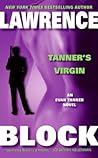
Tanner's Virgin (Evan Tanner, #6)Tanner's Virgin by Lawrence Block

My rating: 2 of 5 stars

Continuing my re-read of Lawrence Block’s Evan Tanner series, his pseudo-sendup of the Bond craze in the 1960s featuring a spy who can’t sleep due to a war injury, joins hundreds of hopeless political causes, and does jobs for a super-secret agency that mistakenly thinks he’s one of their agents. This is the sixth episode, which – when I first read it in the late 80s – was titled Here Comes A Hero. (Block assures us in the afterword that this was the publisher’s idea, not his. It was renamed Tanner’s Virgin in 2005.)

The virgin in question is Phaedra Harrow, a knockout 18-year-old who Tanner is smitten with, and who lives with him for a month, after which she leaves with her virginity intact (much to Tanner’s frustration) to see the world. When Phaedra’s mother calls Tanner up and says her daughter has gone missing, he goes looking for her in London, and discovers she was scammed and sold to white slavers in Afghanistan. Naturally, he launches a one-man rescue mission, which becomes complicated because the British police are after him and a mercenary group of Russians are out to kill him because they think he’s trying to stop their plan to stage a coup in Kabul.

Most of the Tanner novels are very much of their time, and perhaps none more so than this one, in terms of its attitudes towards intentional virginity (the antithesis of the sexually liberated 60s) and sex trafficking, and the psychological impact of the latter on a woman who practiced the former until she was forced into prostitution. Block is clear that sex trafficking is a bad thing, but he deploys it as a fairly standard plot device, and IMO it's a heavy topic that doesn’t quite work with the series’ generally light tone, especially now that we live in the era of Epstein Island. It’s also kind of a retread of The Scoreless Thai in that it’s another “Tanner goes to rescue this episode’s love interest who has gone missing in the Third World” plot. Overall, it’s still a brisk read, and parts of it are absurd fun, but for me, it’s the weakest instalment in the Tanner series so far.

View all my reviews

To the rescue,

This is dF
defrog: (Default)

Since 1990, one of the perennial Hong Kong traditions was a candlelight vigil in Victoria Park on the evening of June 4th to memorialise the victims of the Tiananmen Square massacre in 1989, and to continue their call for democracy in China.

On Friday, Chow Hang-tung and Lee Cheuk-yan – both former leaders of the Hong Kong Alliance in Support of Patriotic Democratic Movements of China (the organisation that held the vigils, which was forced to disband in 2021) were convicted on the charge of inciting subversion. They both face up to ten years in jail. A third defendant, Albert Ho, already pled guilty to the same charge in hopes of a shorter sentence.

The “evidence” (such as it was) was that one of HK Alliance’s slogans was to “end one party rule in China” – which all attendees understood to mean that they wanted the CCP to change the system from a totalitarian dictatorship to a multi-party democracy.

GovHK – and the judges it handpicked to preside over the trial to ensure a conviction – decided it actually meant “violently overthrow the CCP”.

As someone who attended a number of those vigils, I have thoughts.

1. There was never any doubt of the outcome, as GovHK has gone out of its way to ensure that it cannot lose NSL cases. They get to handpick the judges, for goodness’ sake.

2. As with previous NSL cases, the defendants were convicted not by what they actually said, but by what GovHK actively chose to believe they said. We all know “end to one-party rule” meant that CCP should change China’s govt from a totalitarian dictatorship to a multi-party democracy. GovHK chose to pretend it was a call for a violent coup de tat, and made sure the judges interpreted it the way GovHK wants it interpreted.

3. Beyond the obvious, there are several implications here.

If the Tiananmen vigils were in fact deliberate acts of subversion as the court has now ruled:

·      Why did GovHK allow them to take place for 22 years (1997-2019) before deciding to take action?

·      They clearly came nowhere close to overthrowing the CCP after 22 years (or really 30 years, counting the pre-Handover era), so why bother shutting it down at all? How dangerous could it really be?

·      The verdict strongly implies that there are at least 200,000 subversives living in Hong Kong – likely more, given the amount of ppl who supported the vigils but didn’t personally attend every year. In which case, no wonder GovHK is so paranoid.

(NOTE: The police used to lowball vigil attendance estimates to downplay their popularity, but maybe now they’ll use the larger organizer numbers to make it look like a bigger threat to national security. Maybe not. Who knows?)

4. Of course, the above questions are more or less rhetorical. We know that the Tiananmen vigils were 100% legal, until suddenly they weren’t. And we know why – after 2019, Beijing lost patience, GovHK freaked, and both decided it was time to clean house and crack down.

(It’s not lost on me that GovHK is labeling the HK Alliance as a scapegoat by claiming that they spent 30 years sowing hatred of China that eventually contributed to the 2019 “colour revolution” – which it wasn’t, but Big Lies are big.)

5. One very annoying aspect of this is that for years – certainly before 2019 but most definitely afterwards – GovHK leaders were asked by the media, “So is the vigil officially banned or not?” And every time, GovHK dodged the question. Every time. They didn’t have to. But they did.

They never gave a straight answer, and the first year they banned the vigil, they used COVID as an excuse rather than admit it was banned. They shut down a June 4th museum, arranged for some “patriots” to take over Victoria Park every June 4th in perpetuity, and put out extra patrols every June 4th to arrest anyone who looks like they might be engaged in soft resistance (whatever that means), and STILL wouldn’t outright admit that the Tiananmen vigil – or any mention of the Tiananmen Square massacre – was illegal.

Why?

My guess is that they needed a court case to say it for them – perhaps so they could maintain the fiction that HK does everything by rule of law and still has free speech and doesn’t jail ppl for criticizing the govt, etc.

“We didn’t ban it – the court found them guilty of crimes! There’s a difference!” Like that.

Anyway, they can say it now. Only now their basis for saying it is that the HK Alliance was guilty of intentionally committing subversion for 30 years, and that it had the support of hundreds of thousands of Hongkongers (if not millions) who attended those vigils over the years – all of whom have just been labeled subversives.

Assuming GovHK realizes this (and it might not have occurred to them), what will they do about it? Whatever it is, it’s likely to be neither good nor sensible.

6. In conclusion, I am in no way saying anyone should do this, but as a thought experiment:

What would happen if – on June 4, 2027 – every single person who ever supported the Tiananmen vigils at any time in their lives went to Causeway Bay. Around 8pm, say.

No candles, no flowers, no performance art, no phone torches, no t-shirt slogans, no speeches – just show up and hang around for awhile, do window shopping or whatever. Just be present.

Assuming everyone who ever attended a vigil agreed to do this, how many people would show up?

Again, I’m not saying people should do this.

But what if they did, what would happen, do you think?

Anyway.

“No empire intoxicated with the red wine of power and the plunder of weaker races has yet lived long in this world.”

Mahatma Gandhi said that. He was right.

Be kind to each other. Hydrate. Be water. Keep the faith. Live in truth. Outlive them all.

Burn the flame,

This is dF


defrog: (books)

It seems like I’m averaging two books a month now. On the other hand, I started one of these two months ago, so who knows? And who cares? Not I.

Anyways.

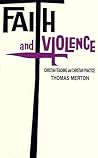
Faith and Violence: Christian Teaching and Christian PracticeFaith and Violence: Christian Teaching and Christian Practice by Thomas Merton

My rating: 4 of 5 stars

This is my third time reading Thomas Merton, and this offers something different from the other two books. While No Man Is an Island contains reflections on the nature of human spirituality, and The Seven Storey Mountain is Merton’s autobiography, Faith and Violence is the first time I’ve come across Merton writing about contemporary political and social issues – and by “contemporary”, I mean the mid-late 60s when this collection was written and published, which means the issues in question mainly concern the Vietnam war and the American civil rights movement.

The essays (some of which are also book reviews relevant to the overall theme) are grouped into four main sections: a theology of non-violent resistance in a violent world; the Vietnam war; the civil rights movement’s shift from non-violence to Black Power; and a critique of “God is Dead” theology that was emerging at the time. The latter may seem like the odd man out, but because Merton was critical of the Church’s support for the war and Christian complicity with racial injustice, he suggested that “God is Dead” theology – which in super-simple terms proposed that Christianity can only be relevant in a secular society by becoming more secular – might also shed some light on the Church’s attitudes to racism and an unjust war.

There’s a lot to chew on here, starting with the fact that Merton very much saw the problems of violence, war and racism as systemic, institutional problems, not individual problems, and must be addressed as such to deal with them. As Merton writes: "Modern technological mass murder is not directly visible, like individual murder. It is abstract, corporate, businesslike, cool, free of guilt-feelings and therefore a thousand times more deadly and effective than the eruption of violence out of individual hate. It is this polite, massively organized white-collar murder machine that threatens the world with destruction, not the violence of a few desperate teen-agers in a slum. But our antiquated theology myopically focused on individual violence alone fails to see this."

The other big takeaway for me is how shockingly relevant Merton’s essays are in 2026 in the age of Trump, whose racist and violent immigration policy and wars of choice have the full-throated support of conservative evangelical churches, which has in turn elevated white supremacy and Christian nationalism to frightening levels of power. There’s stuff here to disagree with too, but overall, reading this now, these essays (with a couple of exceptions) makes Merton look like a prophet.


Memoirs Found in a BathtubMemoirs Found in a Bathtub by Stanisław Lem

My rating: 3 of 5 stars

Stanislaw Lem is the only author I ever tried because he was recommended by a online meme quiz. And I’ve generally never regretted it, though there have been a couple of duds. This one is somewhere in between, though at least it’s rather different from what I’ve read from him previously, which is mostly philosophical SF satire. Memoirs Found In A Bathtub has an SF element in that the titular memoir was discovered in the distant future in the ruins of what is believed to have been a vast underground intelligence complex in America dubbed the “Third Pentagon”.

But the main story is essentially a Kafkaesque satire of bureaucracy and the duplicitous paranoia of spy agencies. The memoir was written by an unnamed agent who has been assigned a top mission – only he has no idea what it is or how he’s supposed to carry it out. He wanders the endless halls of “The Building” (as everyone calls it) trying to get answers and make sense of it all, and is constantly misdirected, deflected, and stymied. Everyone speaks in code, and isn’t who they appear to be, no one trusts anyone, and every encounter is a coded test to find out who is a double/triple/quadruple agent.

That sounds kind of straightforward, but in reality it’s chaotic madness – which is sort of the point. Lem imagines an insular, isolated intelligence community that has no idea what is real and what isn’t, or who its own agents and staff are really working for, and has long since gone mad as a result. It’s a lot like reading Kafka’s The Trial in that it’s a surreal comic nightmare highlighting the absurdity of bureaucracy. Also like The Trial, it’s brilliant in some places and tedious in others as the agent goes in circles, bouncing from one office to the next, getting nowhere but determined to try and find out what’s going on, over and over. The implications at the end are fun to think about, but it also reminds me of a quip from comedian Bill Bailey: “Well, that was a long walk down a windy beach to a café that was closed.”

View all my reviews

Agentic,

This is dF
defrog: (puzzler)
America is 250 years old today.

Here’s how that’s going.


Not much I can add to this, really, except that it’s completely within the character of this admin to take a major national anniversary like this and turn it into a cringey projection of Trump’s ego.

If it helps, remember that time is an illusion and thus so are calendars, which means anniversaries, while nice, don’t define who we are. Also, empires come and go like leaves on the wind, etc.

Anyway, enjoy your weekend. Such as it is.

Bread and circuses,

This is dF
defrog: (books)
One of these books took me nine months to finish. It was for a class, but it might have taken me that long anyway, for reasons that shall perhaps become clear.

A History of Christianity: The First Three Thousand YearsA History of Christianity: The First Three Thousand Years by Diarmaid MacCulloch

My rating: 3 of 5 stars

I started reading this last year as part of a class on the same topic. Class wraps up tomorrow, and I finished reading the book last week, and I can’t remember the last time I thought at the end of a book, “Man, I’m glad that’s over!” Which is not to say it’s a bad book. It’s just a lot to take in. Diarmaid MacCulloch essentially compresses 3,000 years of history into a little over a thousand pages, which – even with his accessible writing style (compared to academic textbooks, anyway) – makes for very dense reading.

While Christianity as a religion started almost 2,000 years ago, MacCulloch starts a thousand years earlier with the Greek and Roman empires to provide the context in which Christianity emerged from Israel (which was occupied by Rome when Jesus arrived, while Greek language and philosophy were well known in the Levant). From there, he goes back and forth through time in order to cover parallel developments in Western Europe, Eastern Europe, Asia Minor, North Africa and Russia as Christianity spread all over the world, and ends with the “culture wars” that have engulfed the Catholic and Protestant churches from 1960 up to the book’s publication in 2011.

I’m not sure how much I learned – as I say, it’s a dense infodump of a book, and even then, MacCulloch necessarily oversimplifies a lot of details with passing references (the Avignon papacy comes to mind). I will say MacCulloch is good at pointing out specific turning points in history where the Church could have gone in a different direction or wiped out completely if not by happy accidents of history, which is interesting. Probably the biggest takeaway for me is that the book makes very clear that the Church (and its underpinning theology) has never been a static thing – it has always evolved and adapted with the times along with the rest of the world. And given much of the bigoted, bloody horrors of its history, that can only be a good thing. As bad as some people think the Church is now, it used to be a lot worse.

It’s also something to keep in mind as people still argue about LGBTIA issues and theology evolves outside of the Western Heterosexual Man box to include feminist theology, queer theology, trans theology, anti-colonialist theology, etc, while certain conservative Evangelicals are panicking over this and advocating Christian nationalism as an antidote. Point being: it’s the latest stage of Christianity’s evolution, which shows that it’s still evolving. Just as we look back today at the Church’s involvement in the Crusades and slavery and say, “That’s not what Jesus preached – how could they get that so wrong?”, in a couple hundred years, history students may be looking at the current Church arguing over gay marriage, gender fluidity and ordaining women and asking similar questions about us.


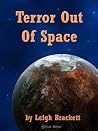
Terror Out Of SpaceTerror Out Of Space by Leigh Brackett

My rating: 2 of 5 stars

Continuing my exploration of the works of Leigh Brackett, this is a 1944 novelette in which Lundy, an officer of the Tri-Worlds Police (Special Branch!), is flying over Venus, tasked with delivering an alien lifeform to scientists for analysis. This is dangerous work – not least because the alien is telepathic and can make men worship her, and anyone who has ever looked in its eyes has gone insane.

That includes Farrell, who is tied up on the ship with Lundy and his partner Jackie Smith. Almost right away, Farrell breaks free, Smith is controlled by the alien, and the ship crashes into the Venusian ocean. Only Lundy survives, but the alien escapes in the crash. As he makes his way across the ocean floor, he’s almost eaten by flesh-eating monster flowers before being rescued by telepathic Venusians who are sort of like sentient kelp. The alien has hypnotised all their males, and ask him to help.

And, well. I like a lot of Brackett’s Golden Age stuff, but this one didn’t really work for me overall. I appreciate her vivid imagination of different types of alien races, and the fact that she actually presents the alien’s point of view, turning a standard hunt-the-alien tale into something a little richer that also makes for a more interesting ending. But getting there is a slog, with the opening action a bit jumbly, and the middle section hallucinatory to the point of being hard to follow – at least for me.

View all my reviews

Unafraid,

This is dF
defrog: (books)
Well, pretty fast, anyway.

Tanner's Tiger (Evan Tanner, #5)Tanner's Tiger by Lawrence Block

My rating: 4 of 5 stars

Continuing my re-read of Block’s Evan Tanner series, this is the fifth instalment, which sees Evan Michael Tanner – who cannot sleep due to a war injury, joins lost causes and takes assignments from a nameless US spy agency that mistakenly thinks he’s one of their agents – embarks on a mission to take his adopted 7-year-old daughter (and heir to the Lithuanian throne) Minna to the World’s Fair in Montreal. Which may not sound like a dangerous secret mission – except that his boss (known only as The Chief) suspects the Cuban Pavilion is up to something, and wants Tanner to find out what it is. Tanner accepts, partly because Minna wants to go to the Fair, but mainly to escape New York’s oppressive heatwave.

Things start to go wrong almost immediately when Tanner is refused entry into Canada because one of his pet lost causes is a Quebec independence group called MNQ. Undeterred, Tanner finds another way in, goes to the World’s Fair and confirms that something’s fishy about the Cuban Pavilion when Minna goes missing while inside it. Once the police discover he’s in the country, making him a fugitive, he turns to the MNQ, who are planning to assassinate Queen Elizabeth II when she visits the Fair and want Tanner to help. And then there’s the accidental theft of a few million dollars’ worth of heroin from the Corsican Mafia …

Like that. This is one of the more fun entries in the series as Tanner’s problems pile up – which is typical of his adventures, though in this case it also compensates for the fact that his mission involves going to what should be the easiest country Tanner has ever had to enter. It’s also noteworthy that his tryst with sexy MNQ member Arlette (the “tiger” of the title) is probably the most realistic of Tanner’s dalliances in the series so far (which is to say, the least Bond-like). Block doesn’t quite stick the landing at the end, opting for a fast, overly-tidy wrap-up that glosses over the impact that being held prisoner for several days might have on a seven-year-old kid. Other than that, it’s still more fun than Bond, for my money.


This Crowded EarthThis Crowded Earth by Robert Bloch

My rating: 1 of 5 stars

I’ve known about Robert Bloch for decades, but I’ve mostly only read him whenever one of his short stories appeared in an anthology I happened to be reading. The exceptions are two pulp crime novels – Shooting Star/Spiderweb – that were reissued as a double novel by Hard Case Crime some time ago. None of them made me a big fan, but I generally found his work to be entertaining, at least. So I thought I’d try this short 1958 novel that imagines a future Earth where overpopulation has become a global problem.

The story – which starts in 1997 – follows Harry Collins, an ad executive who lives in Chicago in a tiny cubicle, which as a single person is all he’s entitled to in the name of saving space. Driven crazy by the pressure of his work and living in such a crowded city, he attempts suicide, but is stopped in time and sent to a large spacious camp in the wilderness to recover. This suits him fine until he meets another inmate – a journalist named Archie – who tells him the camp is in fact a research facility where Dr. Leffingwell is working on a solution to the population problem that is not only horrifying, but results in unintended consequences that could end the human race.

It sounds good on paper, but the execution didn’t really work for me, not least because this crowded Earth apparently still has plenty of wilderness left, which it hasn’t occurred to anyone to make use of to spread people out more. In fact, Dr. Leffingwell’s solution seems extreme compared to other more practical solutions, and it’s not clear to me why his solution would even save space. The scope of the novel is ambitious – it starts in 1997 and ends in 2065, but intersperses Collins’ story with chapters where minor characters deal with the consequences of Leffingwell’s solution, which tends to interrupt the flow. As overpopulation dystopias go, Harry Harrison’s Make Room! Make Room! (and even Alexander Payne’s 2017 film Downsizing) did it better and more convincingly. That said, I’ll probably try Bloch again one day – he writes readable prose, and you can’t win ‘em all.

View all my reviews

A face in the crowd,

This is dF

100 PUNKS

May. 19th, 2026 09:49 am
defrog: (puzzler)

ITEM: Rolling Stone has published a listicle of the Top 100 Punk Albums of all time. Inevitably, a lot of people online are sneering at it. Which is so punk rock!

Well, look, all online lists are basically meant to drive clicks and "engagement", and we can always argue over "is this punk rock" etc.

On the other hand, Paramore?

The weird thing (apart from it being heavily skewed towards the US – I'm sure a Mojo list would skew the other way) is that while I don’t object to the majority of the entries, they’re also so obvious that it feels like they’re ticking boxes.

I guess the real drama is in the rankings, but again, I think we all knew what No.1 was going to be before we started scrolling.

But, again, stuff like this is for starting arguments, not establishing canon, so I shouldn’t take it too seriously.

Party with me punker,

This is dF

defrog: (Default)
And now The Who, as you’ve never heard them before.


This is dEFROG-FM, with magic in my eyes.
defrog: (Default)
Somewhere in an alternate universe, Trump and Xi Jinping have formed a band and released this as the theme song for their meeting.*


This is dEFROG-FM, chasing stories in the garden.

*Not really.
defrog: (puzzler)
Status update.


This is dEFROG-FM, walking the floor and watching the door.
defrog: (Default)
If I ever do a playlist or show on the greatest rock'n'roll riffs, I would definitely put this on it. Jim Babjak doesn't get nearly enough credit for coming up with such an agile, muscular and addictive riff.


This is dEFROG-FM, where no one wins or takes the blame.
defrog: (science!)
It’s Labour Day in most parts of the world.

If you’re planning any activities to mark the occasion, and if you need a playlist for that, and if you don’t mind that a lot of the songs aren’t explicitly about the labour movement (or anything work related), or if you dig playlists with a vague robot dystopia theme, you might consider using this one.


Beep boop computers.

This is dF
defrog: (books)
50% boost via a class assignment. It counts!

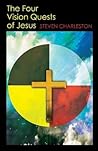
The Four Vision Quests of JesusThe Four Vision Quests of Jesus by Steven Charleston

My rating: 5 of 5 stars

One good thing about taking classes is that it leads you to reading books it might not otherwise have occurred to you to try if you just saw it sitting on a bookstore shelf. Such is the case with this, in which Steven Charleston (a Choctaw Native American and an ordained Episcopal priest) writes about how, as a young man – faced with the possibility of having to choose between his Christian faith and his Choctaw heritage – sought a way to reconcile them. He found the answer in the traditional Native practice of the vision quest.

Put simply, a vision quest is a ritual in which a person goes through a physical ordeal of purification and fasting in order to receive spiritual advice in the form of a vision that results in a transformation. Charleston’s own vision quest led him to realise that (1) Jesus’ 40 days in the desert was a vision quest itself, (2) four stories in Matthew’s gospel can be interpreted from a Native American POV as vision quests, and (3) the incarnation of Jesus was God’s own vision quest to become a transformative reality for his children. Charleston’s thesis is that both Native American and Christian traditions invite us to the dynamic inner experience of relating with God and growing in our humanity.

I’m oversimplifying it due to lack of space – it’s a complex concept even before you get into the theological comparisons between Christianity and the Native American concept of God. But it’s a fascinating read – not only for the detailed descriptions of Native American culture and spirituality (as well as the suffering they endured at the hands of white colonialists), but also how these dovetail with and/or map onto the overall Gospel message and its underlying theology. As with all things theological, there are points of contention and plenty of room for misunderstandings of what Charleston is saying here – and obviously, for people of certain political persuasions, the whole book is probably woke heresy. For me, I got a lot out of it, both intellectually and spiritually.


The TellingThe Telling by Ursula K. Le Guin

My rating: 4 of 5 stars

Published in 2000, this is the eighth and last instalment of Ursula K. Le Guin’s Hainish Cycle novels, in which a young woman from Terra named Sutty is sent to the planet Aka on her first mission as an Observer for the Ekumen (the alliance of Hainish worlds). Aka’s corporate government has ambitions of its own to become a technological superpower, join the Ekumen and explore interstellar space. The thing is, the Ekumen believes you can only really know a society from its history and its cultural roots, but the Corporation has outlawed and suppressed all of Aka’s traditional customs and beliefs (to include its original language) in fear that these will prevent them from achieving their vision.

Sutty – who specialises in language and literature – is assigned by the Ekumen to learn about pre-Corporate Akan culture and history, but isn’t allowed outside of the capital of Dovra City where that info has been erased. She also finds it hard to be objective about the Corporation, as she grew up on Terra when it had become an oppressive and brutal religious theocracy. When the Corporation unexpectedly approves an Ekumen trip to the old provincial town Okzat-Ozkat, Sutty’s boss asks her to go, suspecting that knowledge of the old ways may still exist there in some form. Sutty reluctantly agrees to make the trip and try to uncover details of Aka’s secret history and culture – particularly its traditions of storytelling (a.k.a. "the Telling").

Reportedly, Le Guin used China’s Great Leap Forward and the Cultural Revolution as a framework for Aka’s background, though of course it’s far more than just a rehash of that particular history. In any case, I found Sutty’s exploration of Akan culture compelling, not least because it illustrates not only why cultural history matters, but also how “banned” ideas and practices can still thrive in oppressive societies when they’re embedded in daily life to the point that it’s hard for authorities to pinpoint it as an illegal activity. Also interesting is Sutty’s struggle to maintain objectivity (given her own experience of religious and sexual oppression on Terra), especially as she immerses herself deeper into Okzat-Ozkat's "forbidden" culture under the nose of a govt Monitor assigned to keep an eye on her. Some readers may find it too slow, but I found myself engrossed by it. It may not be her best novel, but it’s possibly one of her more underrated.

View all my reviews

Stories I tell,

This is dF
defrog: (science!)
The social medias is abuzz with Rush’s surprise appearance as the opening act of the Juno Awards, in which they returned to their roots, playing “Finding My Way”, the first track from their first album.


As you’ve no doubt heard, it’s their first time playing as Rush since 2015 and since the death of drummer Neil Peart in 2018, at which point everyone – including Geddy Lee and Alex Lifeson – felt that was the end of Rush, as Peart was considered to be irreplaceable.

As you’ve also no doubt heard, Lee and Lifeson surprised everyone last year when they announced they had in fact found a replacement – German drummer Anika Nilles – and would be returning to the road for a new tour in 2026.

The Juno appearance was essentially a soft launch for that, with Nilles onstage as well as Loren Gold, who will be handling the keyboard bits of Rush songs rather than Lee having to do it all himself.

There have been something like 1.2 million hot takes on the Juno gig – some positive, some not, some constructive, some not. The usual, then.

And of course, as a lifelong Rush fan, I have my own hot take to add to the pile, and this is it:

1. To get the obvious out of the way, Nilles was great. She’s no Neil Peart, but no one is. You could also argue that Neil Peart was no Anika Nilles. All of which is fine and proper.

Some will nitpick and say that technically she proved she could at least fill John Rutsey’s shoes (as Peart joined Rush on their second LP). That said, having watched them play together live, I have full confidence that if she couldn’t handle anything the Rush back catalog has to throw at her, Lee and Lifeson wouldn’t have hired her in the first place.

2. Some will of course continue to say Peart is irreplaceable. Maybe. On the other hand, it would be false to say Peart had no equal in terms of technical ability – there are tons of TikToks out there with wannabe drummers who can cover “YYZ” flawlessly. There’s also this interesting interview in Classic Rock magazine in which Lifeson explains how replacing Peart is not really about technical ability but the feel:
 
“So you get a sense of appreciation for the way the song is, but you also get a more acute appreciation for how Neil played. Because when you see someone else trying to capture his feel, you realise what kind of player he was, and the tightness of his attitude, the firmness in attack as well.

"With Tom Sawyer, or even Limelight, you can’t just shuffle through those songs, you have to be attentive. And, you know, stand up straight. And that’s sort of where the feel comes from.”

That feel is what Nilles had to get right, and as Lifeson admits in the same interview, it took four days of rehearsals for all three of them to figure that out:
 
"And on the fifth day, on the last day that we rehearsed, she took all our comments about feel, about Neil’s feel and the way he played, and being very cognisant of the ability that he had, and bang! She nailed the songs all day. It was a real ‘Wow!’ moment.
 
In other words, for all the other musicians in the band, it’s not just what the drummer plays but how they play it. Nilles can’t just imitate Peart – she has to play in a way that doesn’t throw Lee and Lifeson off.

If the Juno gig is any indication, they seem to have worked that out just fine. Once the tour kicks off, we’ll find out.

3. Like a lot of people, I was happy for Rush to call it a day after Peart’s death. There’s always this debate about whether bands with established and beloved lineups should stop when one of them (traditionally the drummer) dies. Do we do a Zeppelin? Do we do a Who? In a sense, there’s no wrong decision, but for perspective, the Zeppelin/Who examples happened in the late 70s. Since that time, we’ve long become accustomed to bands continuing with multiple lineup changes, and it works more often than not. At some point a band can become more than the sum of its parts if the core elements remain and new elements can fit seamlessly. (Or, as Mark E Smith once said, “If it’s me and your granny on bongos, it’s still The Fall.”)

Anyway, at the time, I thought Lee and Lifeson made a good decision to go out on a high note. On the other hand, they clearly missed playing the music, and eventually decided that the best way to honour Peart would be to keep the music going, provided they could find someone worthy of the drummer’s seat.

4. So, while part of me kind of wishes they had let their legacy speak for itself and ride off into the sunset, everyone on that stage was clearly having an absolute blast playing together, which is really what it’s all about at the end of the day. So it feels churlish to complain that musicians I love and respect are up there having a great time and enjoying themselves – and totally blowing the roof off the dump in the process.

5. I admit, I may feel differently if they decide to do a new album. Peart’s lyrics were the heart and soul of Rush’s music, and there’s a reason Lee and Lifeson generally left the lyrics to him. Maybe Nilles can write epic SF fantasies and technocratic dystopian allegories in metered verse too – I dunno. But that might be a bridge too far.

Then again, Rush surprised us at Juno. Maybe they’re not done surprising us yet.

On the road again,

This is dF

defrog: (45 frog)
Nobody:


Absolutely nobody:


Me: Hey, I made a playlist for Easter Sunday, check it out!


Everyone: Oh, Jesus.


Me: Exactly!


PRODUCTION NOTE: The main objective was to avoid kids’ songs and church hymns. Which is funny because when you Google “songs about or related to Easter”, about 94% of results are mostly split between kids’ songs and church hymns. So this one took some work to get it to two hours, is what I’m saying.

Look busy,

This is dF
defrog: (books)

Truly I am.

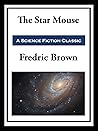
The Star MouseThe Star Mouse by Fredric Brown

My rating: 3 of 5 stars

I generally like Fredric Brown, and read him when I get a chance, since so much of his work is criminally out of print. So I was chuffed to find out that Project Gutenberg has archived some of his stories from his early pulp SF days. I decided more or less at random to start with this tale from 1942 about, yes, a star mouse, albeit a not-exactly-willing one.

The story starts with Professor Oberburger, a scientist who fled Nazi Germany and now lives in Connecticut, where he is trying to develop rocket fuel for a small experimental spaceship capable of going to the moon. For a test subject, Professor Oberburger captures a mouse living in his house, which he names Mitkey. The professor doesn’t expect Mitkey to return from his maiden flight. But he does – after an unexpected encounter on his way to the moon …

Well, it’s good fun, really, although I’ll add that the twist ending (one of Brown’s trademarks) adds a bittersweet aftertaste to what otherwise have been a cute Disney-eque story. And given Mitkey’s namesake, that may have been intentional on Brown’s part. Anyway, it’s a good yarn. Fair warning: Brown is one of those writers who writes foreign accents into the dialogue (“Und now, idt is budt a madter of combining der fuel tubes so they work in obbosite bairs,” etc), which slows things down some, but everyone did it in those days, and at least Brown is good at it.


Empire of AI: Dreams and Nightmares in Sam Altman's OpenAIEmpire of AI: Dreams and Nightmares in Sam Altman's OpenAI by Karen Hao

My rating: 5 of 5 stars

One of my day jobs is tech journalism, so of course I’ve been writing a lot lately about AI. I also read publications like MIT Technology Review quite a bit, so I was already familiar with Karen Hao’s excellent journalism work with them. So I was keen to read this, which is mainly the story of OpenAI (the creator of ChatGPT and its variants) and its founder Sam Altman, but also the rise of the AI industry itself, and how that rise is fast creating an oligarchy of corrupt and exploitative technological empires (with OpenAI leading the charge) with real control over resources and people, especially in developing countries with less economic and political power.

In essence, Sam Altman started OpenAI as a non-profit research company with the goal of developing AGI (artificial general intelligence, the theoretical version of AI that’s as smart or smarter than human intelligence and therefore potentially the most dangerous) before anyone else does to ensure that it’s developed ethically and safely and benefits humanity. But in the process of chasing that goal, OpenAI has sparked a tech arms race that consumes huge amounts of energy and water, hoovers up copyrighted and personal data of everyone on the planet without their consent, and employs people in the Global South to clean up that data for sweatshop wages (not to mention the psychological impact of having to watch the absolute worst of the web all day long to make sure it doesn’t end up in AI datasets) – all while OpenAI has increasingly sidelined its own safety teams in its quest to stay ahead of everyone else.

As Hao points out, this is not an anti-AI book, but a warning of where the current AI leadership is headed with its imperialist mindset (consciously or otherwise) and who’s getting exploited along the way. Hao also makes the argument that it doesn’t have to be this way – we can have useful, ethical and beneficial AI, but we’re not going to get it from Silicon Valley broligarchs. It will only happen when people organise at grassroots community levels and work to redistribute that power, and regain control of their data and land being commandeered to build these empires.

Inevitably, the book is already outdated, as the AI industry has continued to evolve and grow in positive and negative ways. But Hao tells the story as well as it can be told, and especially excels at covering the hidden cost of AI on communities in the Global South, which for me is the more interesting part of the book – I’d have liked to see more of that and less of the OpenAI corporate drama, though I can see why that story had to be told to understand why all this is happening. Needless to say, fans of OpenAI, Sam Altman, Elon Musk and Silicon Valley techbro hype may not like this as much as me. So it goes.

View all my reviews

Empire down,

This is dF
defrog: (puzzler)

If I was still doing college radio, and didn’t give a flip about FCC indecency rules, this might be my playlist for tonight.


PRODUCTION NOTE 1:
Before anyone asks, I used a cover of “War Pigs” instead of the original song by Sabbath because (1) I already had an Ozzy Osbourne song, and (2) the Puddles Pity Party version is actually quite good – it showcases the gravitas of the song in a different way, and IMO it works.

PRODUCTION NOTE 2: This was curated from a pool of over 200 songs, and could easily have gone to a four-hour runtime. So if you think something’s missing, you’re probably right. If the war is still going this time next year, maybe I’ll do a sequel.

War all the time,

This is dF
defrog: (books)

Taking it up a few gears this month, thanks to pulp fiction. Go me!

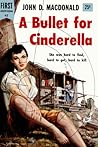
A Bullet for CinderellaA Bullet for Cinderella by John D. MacDonald

My rating: 3 of 5 stars

I tried John D MacDonald for the first time last year with The Girl, the Gold Watch & Everything, and while it was okay, it didn’t inspire me to seek out more of MacDonald’s stuff. But this 1955 novel fell into my lap by happenstance, and it seemed more like straightforward pulp crime, so I decided to give it a shot.

The premise is pretty classic noir – Tal Howard, shell-shocked from his time as a POW in the Korean War, shows up in the small town of Hillston with a mission: find $60,000 that his compatriot Timmy Warden (who was a fellow POW and died in the prison camp) had embezzled from his brother George and buried somewhere. His only lead is a woman named “Cindy”, who Timmy said would know where the money is. Howard arrives in Hillston to discover that another POW – a ruthless psycho named Fitzmartin – is after the same treasure.

It pretty much follows the private eye formula as Howard tries to find Cindy, and in the process meets a girl, gets sapped, annoys the police and finds dead bodies in incriminating places. It reads better that The Girl, The Gold Watch and Everything, and spends some time ruminating on what the POW experience can do to a guy. Even so, Howard isn’t that sympathetic a lead character, which makes the ending a little hard to swallow. Again, it’s okay for what it is, but I’ll probably need more happenstance to try MacDonald again.


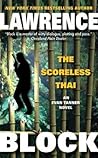
The Scoreless Thai (Evan Tanner, #4)The Scoreless Thai by Lawrence Block

My rating: 3 of 5 stars

Continuing my revisit of Lawrence Block’s Evan Tanner series, this is the fourth instalment, which was titled Two For Tanner when I first read it – which was apparently the publisher’s idea, as they didn’t care for Block’s Title. Maybe they wanted something more identifiable with the series, or maybe they didn’t get the joke, as one of Tanner’s companions in the story is Dhang, a young Thai man who is also a virgin and desperate to get laid. Well.

This time, Tanner – who is incapable of sleeping and freelances for a super-secret agency that thinks he’s one of their agents – is off on a mission to rescue his latest girlfriend, Tuppence Ngawa, a Kenyan-American jazz singer whose band plays a gig for the King of Thailand, after which they are reportedly kidnapped by Communist rebels right around the same time the Royal Jewels are stolen. Given the novel starts with Tanner held prisoner by guerillas in a suspended bamboo cage in the middle of the Thai jungle, it’s obvious his mission isn’t going as planned. His only hope turns out to be Dhang, who is a member of the guerillas and will help Tanner escape ... if he can help him find a woman to boink.

And, well, you know. This one has aged even less well than the previous three, particularly the “Dhang needs women” angle, though I guess you can also say it’s a pretty accurate representation of how Americans viewed both sex and Southeast Asia in the late 60s. And Tanner is comparatively more enlightened than most of his contemporaries (to include one of his CIA shadowers in this story). Still, I did find myself wincing a little more than usual. This one is also a bit more grim, as Tanner really gets put through the ringer this time, and also has some critical thoughts on the Vietnam war that was happening at the time, so the tonal shifts can be a bit jarring. For all that, Block (as usual) tells the story well, so as page-turning adventures go, it’s still pretty good.


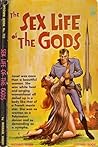
The Sex Life of The GodsThe Sex Life of The Gods by Michael Knerr

My rating: 2 of 5 stars

Found on Project Gutenberg, this is an obscure relic from the days of pulp SF and pulp erotica – or in this case, both. Michael Knerr (a.k.a. M.E. Knerr, both of which may be pen names) wrote some erotic pulp thrillers in the 60s before moving on to non-fiction books in the 70s about stuff like Bigfoot and the Jim Jones Guyana suicides. As far as I can tell, this 1962 novel was his only attempt at SF – and it’s probably as well.

The premise: a man wakes up in the woods next to a plane crash with amnesia. His wallet tells him he’s Nick Danson, and that he’s married to a gorgeous sexpot of a woman named Beth. He seeks her out in hopes of getting his memory back, and finds he’s being tailed. He’s also having weird dreams about being a space soldier in an alien race of gods with a gorgeous sexpot of a girlfriend named Jela. But what if those aren’t dreams – and he’s not really Nick Danson?

What fun!

But of course, this ain’t Philip K. Dick. The actual SF part is poorly fleshed out (to say nothing of the distinction between humans and the alien ‘gods’), but then the target audience probably wasn’t reading this for the SF bits. As one might expect from the title alone, there’s a whole bunch of sex scenes with Nick and Beth, Nick and Jela and even Nick and random sexpot neighbour Janet, and while they’re tame by modern standards, Knerr really wants you to know that Beth, Jela and Janet had fantastic boobs. On the plus side, it’s readable and fast-paced. Best thing I can say about it is that if anyone had bothered to make a film version in the 60s, it would have made a great MST3K episode.


Zone OneZone One by Colson Whitehead

My rating: 3 of 5 stars

I’ve read and enjoyed two of Colson Whitehead’s novels to date (The Underground Railroad and The Nickel Boys), and when I found out he’d also done a zombie novel, I was keen to see what he would do with that particular genre, on the reasonable grounds that he would do something different with it. And so he did. The novel starts as the plague appears to be receding. The provisional American govt (now based in Buffalo, NY) has started a rebuilding campaign under its “American Phoenix” programme. To this end, they’ve kicked off an initiative to repopulate Manhattan Island as a testbed for urban repopulation elsewhere.

With the Marines having already killed the bulk of the zombie hordes in Zone One on the southern tip of the island, teams of sweepers are now being sent into the zone to clear buildings of “stragglers” (harmless zombies who generally stay in one place in a catatonic state), plus any flesh-eating monsters the Marines might have missed. The basic story follows three days in the life of a man nicknamed Mark Spitz, a member of Omega unit as they go through the routine of sweeping Zone One. That said, most of that time involves Spitz flashing back to the events that brought him from Last Night to this point, the people he left behind, the people who left him behind, and the various ways everyone is coping with PASD (Post Apocalyptic Stress Disorder).

Notably, his flashbacks are not in linear order, and Whitehead doesn’t neatly separate past and present, giving it an almost stream-of-consciousness-type vibe. A lot of readers have complained about this, having apparently expected a straightforward zombie action thriller, whereas Whitehead is more interested in exploring how people cope psychologically and emotionally with the end of life as they know it as they’re thrown into a nightmare survival trip. But then zombie action thrillers are a dime a dozen these days, so credit to Whitehead for doing something different. The jumbled flashback motif is admittedly a little exhausting to navigate (and it's one reason it took me three months to finish it), yet I found that it does give more emotional heft to a rather exciting final act, when Spitz finds out the true nature of their mission. Probably not for everyone, particularly hardcore zombie fans, but I liked it.

View all my reviews

In the zone,

This is dF
defrog: (onoes)
I have somehow been recruited for a mission in which I’m supposed to impersonate Donald Trump. I don’t remember who hired me for this, what the point of impersonating Trump is, or why I agreed to do it.

I’m told it’s for some livestreaming forum, although Trump is the only speaker, so it seems more like an overblown press conference, with a small in-house audience whose job is to laugh at his jokes.

I’m made up to look like Trump with spray tan and a wig. I go to the event and judging from the attendee reaction, my impersonation is convincing, although I notice some ppl behind me seem to be interested in my hair, and might have figured out it’s a wig. I figure Trump gets this all the time, so I don’t worry too much.

Shift: After the event, I’m at my mom’s old house, still in my Trump get-up. A van pulls into the driveway and as I go to the side door, I see Trump approaching, wearing a long black overcoat, his expression the same menacing scowl as his official presidential portrait. I back away as he steps inside, and as he approaches me, I’m surprised that he’s taller than I thought – almost 9 feet.

Before I can say anything, he opens his overcoat, revealing that he is actually sitting on the shoulders of a man in a general’s uniform. Just as I remember being warned earlier about the general, he reaches out with one hand, grabs me by the shoulder and pulls me to him in an embrace. With the other hand, he pulls out a long knife and stabs me in the back. There’s a sharp pain, and everything fades to black.

And then I woke up.

Trumped again,

This is dF

Profile

defrog: (Default)
defrog

September 2026

S M T W T F S
  12345
678910 1112
13141516171819
20212223242526
27282930   

Syndicate

RSS Atom

Most Popular Tags

Style Credit

Expand Cut Tags

No cut tags
Page generated Oct. 14th, 2026 10:57 pm
Powered by Dreamwidth Studios