![[personal profile]](https://www.dreamwidth.org/img/silk/identity/user.png)


Entry tags:
I’M READING AS FAST AS I CAN (DECEMBER 2015 EDITION)
And that about wraps it up for 2015.
If you’d like to see a summary of my year in reading – and why WOULDN'T you, I mean it’s why yr here, right? – Goodreads has kindly provided a handy infographic here.
You may also like to know that I completed my goal of reading 60 books this year, although not by as big a margin as last year (insert Thomas Pynchon joke here). I think I’ll set the same target for 2016 – my reading pace seems more or less suited to that number, and I didn’t feel rushed this year, so why not?
So, here’s the last batch of book reports for the year.
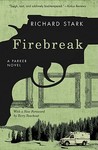 Firebreak by Richard Stark
My rating: 3 of 5 stars
The 20th Parker novel, and the first one to acknowledge the internet age, as the target for this heist is a dot-com billionaire with a stash of stolen paintings, and one of the crewmembers is Larry Lloyd, a computer whiz fresh out of jail after doing time for trying to kill the business partner that screwed him. However, most of that is beside the point, as the main complication for this heist is someone else who is hiring Russian hitmen to kill Parker, and much of the novel involves Parker sorting out that problem before focusing on the heist. There are two notable weaknesses in this one, (1) the technology bits, some of which may only make sense if you don't know how computers work, and (2) the part where we find out who is trying to kill Parker, which makes even less sense given the situation in which the characters were last seen. However, it’s fun watching Stark pile on the complications, especially at the end. Firebreak is somewhat uneven, but otherwise it’s a decent addition to the series.
 The Melancholy of Mechagirl by Catherynne M. Valente
My rating: 3 of 5 stars
This is a collection of short stories and poems, most if not all of which were written while Valente was living in Japan (which is an interesting story in and of itself). I found it in the science-fiction section, but the stories are more a blend of Japanese folklore, ghost stories and post-human surrealist cyberpunk. In literary terms, these stories echo the mythological storytelling of Neil Gaiman and the whimsically surreal lyricism of Ray Bradbury, but without copying either. The result – for me – is that many of the stories are difficult to follow, but written in such captivating language that you find yrself pushing forward with it even if you don’t fully get what’s going on. If nothing else, it’s a refreshingly different Western take on Japanese culture in SF. This is my first time reading Valente, and overall it was a good introduction and an interesting experience.
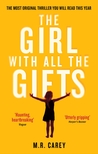 The Girl with All the Gifts by M.R. Carey
My rating: 5 of 5 stars
The cover blurb alone is a great hook (“Every morning, Melanie waits in her cell to be collected for class. When they come for her, Sergeant Parks keeps his gun pointing at her while two of his people strap her into the wheelchair. She thinks they don't like her. She jokes that she won't bite, but they don't laugh …”). Finding out that M.R. Carey is a pen name for Mike Carey sealed the deal for me, as I’m a fan of his work on Hellblazer and his Felix Castor novels, so I was looking forward to this. And it doesn’t disappoint. I can’t say much about the story without giving away the explanation for the opening – it’s better if you don’t know in advance (and as I found out the hard way, many existing Goodreads reviews are full of spoilers, so watch out, although this is also the basis for a film coming out next year, so maybe you’ll find out soon enough). Suffice to say Carey really puts a fresh spin on this particular genre, and delivers a compelling and fairly gruesome page-turner in the bargain. If there’s a weakness, it’s that some of the main characters are a little too obvious as genre archetypes required to drive the story along (possibly as the result of Carey’s use of mythological metaphors). But Carey still manages to flesh them out as real and believable characters. And extra points for coming up with an ending I really didn’t expect.
 Fatale by Jean-Patrick Manchette
My rating: 3 of 5 stars
I’ve never read Jean-Patrick Manchette before, and odds are I might not have heard of him if Hollywood hadn’t recently filmed one of his novels starring Sean Penn, which prompted the re-release of that novel (The Prone Gunman) and this slim novel that reportedly ran so hard against convention that his publisher in France decided not to include it in their regular crime-fiction series. It’s also reportedly his most blatantly political book, albeit not to the point of dominating the narrative. Anyway, it’s Manchette’s take on the femme fatale genre, in which Aimée Joubert – who is moving from town to town, assuming different identities fleecing the local rich folks and leaving a trail of bodies behind her – arrives in the small port town of Bléville for what could be her biggest score … or her last. Manchette keeps it perhaps a little too tight at 90+ pages, but he works in a lot of compressed information about Aimée’s background and the corruption and small-town scandals of Bléville she seeks to exploit, to say nothing of the symbolic metaphors strewn throughout. It’s also interesting that Aimée isn’t just a plotting, sexy golddigger – she’s also a tough martial artist, which is pretty standard today but was quite pioneering in 1977 when the novel was published. A nice, short twist on the femme fatale theme.
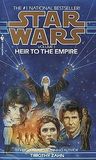 Heir to the Empire by Timothy Zahn
My rating: 2 of 5 stars
As much as I love the Star Wars films, I’ve never read the Expanded Universe books or comics (apart from Splinter Of The Mind’s Eye). The sheer volume just seemed too much to keep up with. But with the new film coming out, I was inspired to dabble, so I decided to start with this one, partly because it features Luke, Leia and Han, and partly because Timothy Zahn has been doing these for years, so I figured he might be a reliable place to start. Well … maybe not. The basic story is okay – as the New Republic struggles to establish itself in the wake of defeating Emperor Palpatine five years previously, Grand Admiral Thrawn of the Imperial Army is determined to re-establish the Empire, and gets himself a Dark Jedi to help him. But Zahn’s writing style is a little too average for my taste. And that might be okay, except he also spends too much time making references to plot points in the original trilogy – sometimes to the point of rehashing famous lines and scenes in new contexts, which comes across as too blatant an attempt at fan-service continuity. I already have another Star Wars book in the queue (not from this trilogy), so I’ll try again later, but I’m thinking maybe the Star Wars Expanded Universe isn’t for me. I don’t see myself getting the next book in the Thrawn trilogy at this stage.
Empire down,
This is dF
If you’d like to see a summary of my year in reading – and why WOULDN'T you, I mean it’s why yr here, right? – Goodreads has kindly provided a handy infographic here.
You may also like to know that I completed my goal of reading 60 books this year, although not by as big a margin as last year (insert Thomas Pynchon joke here). I think I’ll set the same target for 2016 – my reading pace seems more or less suited to that number, and I didn’t feel rushed this year, so why not?
So, here’s the last batch of book reports for the year.
Firebreak by Richard StarkMy rating: 3 of 5 stars
The 20th Parker novel, and the first one to acknowledge the internet age, as the target for this heist is a dot-com billionaire with a stash of stolen paintings, and one of the crewmembers is Larry Lloyd, a computer whiz fresh out of jail after doing time for trying to kill the business partner that screwed him. However, most of that is beside the point, as the main complication for this heist is someone else who is hiring Russian hitmen to kill Parker, and much of the novel involves Parker sorting out that problem before focusing on the heist. There are two notable weaknesses in this one, (1) the technology bits, some of which may only make sense if you don't know how computers work, and (2) the part where we find out who is trying to kill Parker, which makes even less sense given the situation in which the characters were last seen. However, it’s fun watching Stark pile on the complications, especially at the end. Firebreak is somewhat uneven, but otherwise it’s a decent addition to the series.
The Melancholy of Mechagirl by Catherynne M. ValenteMy rating: 3 of 5 stars
This is a collection of short stories and poems, most if not all of which were written while Valente was living in Japan (which is an interesting story in and of itself). I found it in the science-fiction section, but the stories are more a blend of Japanese folklore, ghost stories and post-human surrealist cyberpunk. In literary terms, these stories echo the mythological storytelling of Neil Gaiman and the whimsically surreal lyricism of Ray Bradbury, but without copying either. The result – for me – is that many of the stories are difficult to follow, but written in such captivating language that you find yrself pushing forward with it even if you don’t fully get what’s going on. If nothing else, it’s a refreshingly different Western take on Japanese culture in SF. This is my first time reading Valente, and overall it was a good introduction and an interesting experience.
The Girl with All the Gifts by M.R. CareyMy rating: 5 of 5 stars
The cover blurb alone is a great hook (“Every morning, Melanie waits in her cell to be collected for class. When they come for her, Sergeant Parks keeps his gun pointing at her while two of his people strap her into the wheelchair. She thinks they don't like her. She jokes that she won't bite, but they don't laugh …”). Finding out that M.R. Carey is a pen name for Mike Carey sealed the deal for me, as I’m a fan of his work on Hellblazer and his Felix Castor novels, so I was looking forward to this. And it doesn’t disappoint. I can’t say much about the story without giving away the explanation for the opening – it’s better if you don’t know in advance (and as I found out the hard way, many existing Goodreads reviews are full of spoilers, so watch out, although this is also the basis for a film coming out next year, so maybe you’ll find out soon enough). Suffice to say Carey really puts a fresh spin on this particular genre, and delivers a compelling and fairly gruesome page-turner in the bargain. If there’s a weakness, it’s that some of the main characters are a little too obvious as genre archetypes required to drive the story along (possibly as the result of Carey’s use of mythological metaphors). But Carey still manages to flesh them out as real and believable characters. And extra points for coming up with an ending I really didn’t expect.
Fatale by Jean-Patrick ManchetteMy rating: 3 of 5 stars
I’ve never read Jean-Patrick Manchette before, and odds are I might not have heard of him if Hollywood hadn’t recently filmed one of his novels starring Sean Penn, which prompted the re-release of that novel (The Prone Gunman) and this slim novel that reportedly ran so hard against convention that his publisher in France decided not to include it in their regular crime-fiction series. It’s also reportedly his most blatantly political book, albeit not to the point of dominating the narrative. Anyway, it’s Manchette’s take on the femme fatale genre, in which Aimée Joubert – who is moving from town to town, assuming different identities fleecing the local rich folks and leaving a trail of bodies behind her – arrives in the small port town of Bléville for what could be her biggest score … or her last. Manchette keeps it perhaps a little too tight at 90+ pages, but he works in a lot of compressed information about Aimée’s background and the corruption and small-town scandals of Bléville she seeks to exploit, to say nothing of the symbolic metaphors strewn throughout. It’s also interesting that Aimée isn’t just a plotting, sexy golddigger – she’s also a tough martial artist, which is pretty standard today but was quite pioneering in 1977 when the novel was published. A nice, short twist on the femme fatale theme.
Heir to the Empire by Timothy ZahnMy rating: 2 of 5 stars
As much as I love the Star Wars films, I’ve never read the Expanded Universe books or comics (apart from Splinter Of The Mind’s Eye). The sheer volume just seemed too much to keep up with. But with the new film coming out, I was inspired to dabble, so I decided to start with this one, partly because it features Luke, Leia and Han, and partly because Timothy Zahn has been doing these for years, so I figured he might be a reliable place to start. Well … maybe not. The basic story is okay – as the New Republic struggles to establish itself in the wake of defeating Emperor Palpatine five years previously, Grand Admiral Thrawn of the Imperial Army is determined to re-establish the Empire, and gets himself a Dark Jedi to help him. But Zahn’s writing style is a little too average for my taste. And that might be okay, except he also spends too much time making references to plot points in the original trilogy – sometimes to the point of rehashing famous lines and scenes in new contexts, which comes across as too blatant an attempt at fan-service continuity. I already have another Star Wars book in the queue (not from this trilogy), so I’ll try again later, but I’m thinking maybe the Star Wars Expanded Universe isn’t for me. I don’t see myself getting the next book in the Thrawn trilogy at this stage.
Empire down,
This is dF