![[personal profile]](https://www.dreamwidth.org/img/silk/identity/user.png) defrog
defrogTruly I am.
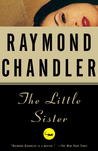 The Little Sister by Raymond Chandler
My rating: 5 of 5 stars
This is possibly the only Chandler book I haven’t yet read (not including anthologies), and one that leverages his writing experience with Hollywood to great effect. PI Philip Marlowe is hired by prim, mousy small-town girl Orfamay Quest to find her older brother, who moved to LA a couple of years ago and has recently vanished without a trace. Naturally, what seems like a straightforward job turns out to be vastly more complicated as bodies start piling up with ice picks stuck in their necks and Marlowe crosses paths with gangsters and rising movie star Mavis Weld. It’s all classic Chandler – booze, broads, Hollywood, mobsters, double crosses, blackmail, murder, Marlowe giving the cops a hard time – it’s all here, and even if it gets a little convoluted by the end, Chandler delivers the goods. Of course, he also delivers the sexism and casual bigotry of the era, although there’s relatively little of the latter in this one and is arguably deployed just so Marlowe can needle a character. Still, Chandler’s writing is pure poetry – there’s lots of great lines here, as well as a brilliant opening chapter.
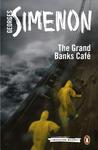 The Grand Banks Café by Georges Simenon
My rating: 4 of 5 stars
Another early Maigret novel, and one that – like many of Simenon’s Maigret novels, it seems – takes place in a small town instead of Paris. This time, it’s the fishing village of Fécamp, where the captain of a fishing trawler has been killed upon returning from a disastrous three-month voyage. The accused killer, Le Clinche, is a former student of a professor who knows Maigret and who asks him to prove Le Clinche’s innocence. Maigret agrees, but the crew is uncooperative, and Le Clinche himself has something to hide, though it may not be what he’s accused of. I enjoyed this one – it’s full of vivid characters, and as always it’s fascinating to watch Maigret employ his method of getting to know the people involved to understand their motivations, which is often the missing piece of the puzzle. Simenon is generally brilliant at dissecting the human-nature element of crime, putting it at the center of the story in an economic style that doesn’t sacrifice pace for character insight.
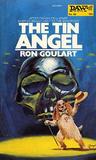 The Tin Angel by Ron Goulart
My rating: 2 of 5 stars
Another Goulart book I haven’t read before – and one that’s a bit oddball even by his standards. The story involves a talkative cyborg dog named Bowser who is a big Hollywood star (and acts like one) and his agent Bert. The two are sent on a road show in Mexico to entertain troops fighting a civil war, but Bert uses the opportunity to look for a friend, TV journalist Pierre Hock, who has gone missing in the area whilst working secretively on a big story involving a planned assassination attempt on the President of the Western United States. So basically it’s the usual Goulart template of Protagonist bouncing from location to location meeting oddball characters who provide the info he needs, only with a wisecracking egotistical talking dog (albeit one who is more than he appears to be). Which should work, but I felt Goulart didn’t really pull this one off – there are some good scenes, but the set-up doesn’t quite work for me and I found Bowser more annoying than funny.
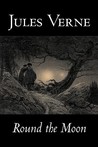 Round the Moon by Jules Verne
My rating: 4 of 5 stars
SLIGHT SPOILERS AHOY: This is the sequel to Verne’s From the Earth to the Moon, which told the story of the Baltimore Gun Club’s attempt to literally shoot the moon with a bloody big cannon – initially with an artillery projectile, until French adventurer and poet Michel Ardan insists on riding inside it so he can explore the moon, after which it becomes a manned mission helmed by BGC president Barbican(e) and his rival Captain Nicholl. That novel left the fate of the three astronauts uncertain This novel basically ties up that loose end as we find out what happened to Barbican(e), Nicholl and Ardan, and – of course – their trip around the moon. Like most Verne novels, the storyline is basically an excuse for the main characters to discuss and do science, which Barbican(e), Nicholl and Ardan do plenty of, in order to figure out how the trip is going, why certain things go wrong, document what they see on the moon, and figure out a way back home. Like the first book, this one has the advantage of having a sense of humor thanks to Ardan, who serves as the romantic non-scientific counterpoint to Barbican(e) and Nicholl’s hardcore science chops (which is another way of saying he's there to ask the dumb questions so the scientists can talk science). And it’s also interesting to see just how ahead of his time Verne was in terms working out what a trip to the moon would involve (even if his 19th-century science turned out to understandably wrong on a few points). That said, it lacks some of the satirical aspects of its predecessor, and – I have to say – by its very existence ruins what was otherwise a brilliant ending to the first book. Still, I found it worth reading.
NOTE: I spelled it Barbican(e) because it’s spelled with an “e” in my edition of From The Earth To The Moon, and without the “e” in this one. I assume it’s a translation issue?
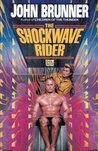 The Shockwave Rider by John Brunner
My rating: 2 of 5 stars
I’ve never read John Brunner before, and I confess the main motivation for starting here is the fact that this 1975 novel – in which Nickie Haflinger, an escapee from the mysterious Tarnover facility, uses a stolen code to hack computers and forge new IDs for himself to evade capture – is generally cited as an ancestor of the cyberpunk genre because it was one of the first SF novels to feature computer networks and hacking as a central concept. Obviously it’s hard to read this without comparing Brunner’s future vision with the internet as we know it today, but much of it is strikingly prophetic in terms of computer networks that provide an overload of mindless (and sometimes cruel) entertainment, gather information on people (personal details, bank info, medical records, work history, etc) and become so central to daily life as to make you vulnerable to attack (such as someone deciding to get petty revenge on you by going online and deleting your utility accounts, for example). That said, the book is more concerned with the kind of society such a system can (and should) enable, and whether the people who live the “plug-in” lifestyle have any real autonomy or are simply being manipulated. All of which is interesting – but Brunner’s future backdrop is somewhat jumbled and hard to follow at times, Haflinger is a bit too arrogant to be a likeable hero, and the bad guys (the govt) are of the typical one-dimensional type. Also, the story gets bogged down by Haflinger’s frequent intellectual arguments with his Tarnover interrogator, Paul Freeman, although admittedly they’re the most interesting part of the book. So all up, it’s okay but uneven. Credit where it’s due in terms of its place in SF genre history, but on its own merit, it didn’t make me want to read anything else by Brunner.
View all my reviews
Future shock,
This is dF
The Little Sister by Raymond ChandlerMy rating: 5 of 5 stars
This is possibly the only Chandler book I haven’t yet read (not including anthologies), and one that leverages his writing experience with Hollywood to great effect. PI Philip Marlowe is hired by prim, mousy small-town girl Orfamay Quest to find her older brother, who moved to LA a couple of years ago and has recently vanished without a trace. Naturally, what seems like a straightforward job turns out to be vastly more complicated as bodies start piling up with ice picks stuck in their necks and Marlowe crosses paths with gangsters and rising movie star Mavis Weld. It’s all classic Chandler – booze, broads, Hollywood, mobsters, double crosses, blackmail, murder, Marlowe giving the cops a hard time – it’s all here, and even if it gets a little convoluted by the end, Chandler delivers the goods. Of course, he also delivers the sexism and casual bigotry of the era, although there’s relatively little of the latter in this one and is arguably deployed just so Marlowe can needle a character. Still, Chandler’s writing is pure poetry – there’s lots of great lines here, as well as a brilliant opening chapter.
The Grand Banks Café by Georges SimenonMy rating: 4 of 5 stars
Another early Maigret novel, and one that – like many of Simenon’s Maigret novels, it seems – takes place in a small town instead of Paris. This time, it’s the fishing village of Fécamp, where the captain of a fishing trawler has been killed upon returning from a disastrous three-month voyage. The accused killer, Le Clinche, is a former student of a professor who knows Maigret and who asks him to prove Le Clinche’s innocence. Maigret agrees, but the crew is uncooperative, and Le Clinche himself has something to hide, though it may not be what he’s accused of. I enjoyed this one – it’s full of vivid characters, and as always it’s fascinating to watch Maigret employ his method of getting to know the people involved to understand their motivations, which is often the missing piece of the puzzle. Simenon is generally brilliant at dissecting the human-nature element of crime, putting it at the center of the story in an economic style that doesn’t sacrifice pace for character insight.
The Tin Angel by Ron GoulartMy rating: 2 of 5 stars
Another Goulart book I haven’t read before – and one that’s a bit oddball even by his standards. The story involves a talkative cyborg dog named Bowser who is a big Hollywood star (and acts like one) and his agent Bert. The two are sent on a road show in Mexico to entertain troops fighting a civil war, but Bert uses the opportunity to look for a friend, TV journalist Pierre Hock, who has gone missing in the area whilst working secretively on a big story involving a planned assassination attempt on the President of the Western United States. So basically it’s the usual Goulart template of Protagonist bouncing from location to location meeting oddball characters who provide the info he needs, only with a wisecracking egotistical talking dog (albeit one who is more than he appears to be). Which should work, but I felt Goulart didn’t really pull this one off – there are some good scenes, but the set-up doesn’t quite work for me and I found Bowser more annoying than funny.
Round the Moon by Jules VerneMy rating: 4 of 5 stars
SLIGHT SPOILERS AHOY: This is the sequel to Verne’s From the Earth to the Moon, which told the story of the Baltimore Gun Club’s attempt to literally shoot the moon with a bloody big cannon – initially with an artillery projectile, until French adventurer and poet Michel Ardan insists on riding inside it so he can explore the moon, after which it becomes a manned mission helmed by BGC president Barbican(e) and his rival Captain Nicholl. That novel left the fate of the three astronauts uncertain This novel basically ties up that loose end as we find out what happened to Barbican(e), Nicholl and Ardan, and – of course – their trip around the moon. Like most Verne novels, the storyline is basically an excuse for the main characters to discuss and do science, which Barbican(e), Nicholl and Ardan do plenty of, in order to figure out how the trip is going, why certain things go wrong, document what they see on the moon, and figure out a way back home. Like the first book, this one has the advantage of having a sense of humor thanks to Ardan, who serves as the romantic non-scientific counterpoint to Barbican(e) and Nicholl’s hardcore science chops (which is another way of saying he's there to ask the dumb questions so the scientists can talk science). And it’s also interesting to see just how ahead of his time Verne was in terms working out what a trip to the moon would involve (even if his 19th-century science turned out to understandably wrong on a few points). That said, it lacks some of the satirical aspects of its predecessor, and – I have to say – by its very existence ruins what was otherwise a brilliant ending to the first book. Still, I found it worth reading.
NOTE: I spelled it Barbican(e) because it’s spelled with an “e” in my edition of From The Earth To The Moon, and without the “e” in this one. I assume it’s a translation issue?
The Shockwave Rider by John BrunnerMy rating: 2 of 5 stars
I’ve never read John Brunner before, and I confess the main motivation for starting here is the fact that this 1975 novel – in which Nickie Haflinger, an escapee from the mysterious Tarnover facility, uses a stolen code to hack computers and forge new IDs for himself to evade capture – is generally cited as an ancestor of the cyberpunk genre because it was one of the first SF novels to feature computer networks and hacking as a central concept. Obviously it’s hard to read this without comparing Brunner’s future vision with the internet as we know it today, but much of it is strikingly prophetic in terms of computer networks that provide an overload of mindless (and sometimes cruel) entertainment, gather information on people (personal details, bank info, medical records, work history, etc) and become so central to daily life as to make you vulnerable to attack (such as someone deciding to get petty revenge on you by going online and deleting your utility accounts, for example). That said, the book is more concerned with the kind of society such a system can (and should) enable, and whether the people who live the “plug-in” lifestyle have any real autonomy or are simply being manipulated. All of which is interesting – but Brunner’s future backdrop is somewhat jumbled and hard to follow at times, Haflinger is a bit too arrogant to be a likeable hero, and the bad guys (the govt) are of the typical one-dimensional type. Also, the story gets bogged down by Haflinger’s frequent intellectual arguments with his Tarnover interrogator, Paul Freeman, although admittedly they’re the most interesting part of the book. So all up, it’s okay but uneven. Credit where it’s due in terms of its place in SF genre history, but on its own merit, it didn’t make me want to read anything else by Brunner.
View all my reviews
Future shock,
This is dF

John Brunner
on 2017-10-13 09:45 am (UTC)