![[personal profile]](https://www.dreamwidth.org/img/silk/identity/user.png) defrog
defrogBooks, books, books and books. I read ‘em, y’all.
 Breakout by Richard Stark
My rating: 4 of 5 stars
Awhile back I started reading Richard Stark’s Parker novels from the beginning. I got as far as #20 (Firebreak), which is when the store I was buying them from stopped carrying them. Anyway, recently I managed to get a copy of #21, and here we are. In this instalment, the title is taken literally – the story opens with Parker in the middle of a heist that’s just gone wrong, and he gets caught and sent to Stoneveldt, a local transit prison that’s never had an escape.
As you might imagine, Parker aims to spoil that record, and starts to put together a plan and a team inside and outside Stoneveldt to bust out. The catch is that one fellow prisoner will only do it if Parker helps him on a heist as soon as they’re out. Remarkably, this sets the stage for not one but three breakouts of different varieties. So you get your money’s worth here.
Stark is probably the only crime writer who could get away with that idea and make it believable. Like with many of the later Parker novels, Stark takes his time building up the story and adding different complexities along the way, but it never feels padded out or forced. It’s a fast-paced and entertaining read – even the third act, which is surprisingly low on action (until the very end), still provides plenty of suspense.
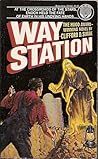 Way Station by Clifford D. Simak
My rating: 4 of 5 stars
I’ve never read Clifford D. Simak before, though I’ve come across his name a lot in the past. A number of people I know have name-checked both him and this 1963 novel as a must-read, and I’m always keen to try authors if enough people whose opinions I trust recommend them. So I picked this up when I came across a copy of it.
The novel has a good hook: Enoch Wallace is a strange hermit in rural Wisconsin who has lived in his house for 100 years but doesn't look a day over 30. Turns out he is the operator of a secret teleportation station inside his home that serves as an interstellar transport hub for the hundreds of alien civilizations in the galaxy. Everything has been going smoothly, but that ends when the CIA start nosing around, Wallace’s hillbilly neighbour starts a feud over his mysterious deaf-mute daughter Lucy, and word arrives that some alien factions want to shut the Earth station down forever. And then there’s the machine that can tap into the spiritual force of the universe that seems to have gone missing …
It sounds like the setup for blockbuster action, but Simak spends much of the novel focusing on the station’s day-to-day operation, the various aliens that pass through, and the loneliness of Wallace, who is isolated from the human race yet not really part of the various alien cultures within Galactic Central. And with Earth on the brink of World War 3, he faces some tough decisions about his own future and that of his home planet. But Simak makes it all work – the focus on Wallace keeps everything grounded in believability for the most part, and apart from a couple of plot holes and slow bits, it’s a pretty solid tale. What other readers will make of it probably depends on whether they like their SF quiet or loud, but for me, I enjoyed it.
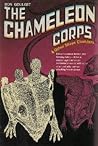 The Chameleon Corps and Other Shape Changers by Ron Goulart
My rating: 3 of 5 stars
Continuing my re-reading of the works of Ron Goulart, this one offers a break from the usual routine in that (1) it’s a collection of (mostly) previously published short stories, and (2) the short stories (mostly) all feature people who can change their shape. The first five stories feature the same shape-changer – Ben Jolson of the Chameleon Corps, whose agents can literally change into anyone or anything (Goulart cites Plastic Man as an influence). Those stories are all set in Goulart’s Barnum System universe. The rest of the stories are standalone and more contemporary, except for one that is tangentially related to the Chameleon Corps.
Goulart’s intro for the collection promises “miniature psychodramas kicking around the idea of self” that contemplate the masks we choose to wear to conceal our identities, and what those masks say about the wearer. I’m not sure if he’s kidding or not – the stories here are too superficial to qualify as psychodramatic explorations of self-identity, not least because Goulart’s characterization usually leaves as much to the reader’s imagination as possible. And his approach to just about everything is to not take these narratives too seriously. On the other hand, Pat Cadigan cites Goulart’s Chameleon Corps stories as a big influence on her own writing, so maybe the shallow party here is me.
Anyway, the Chameleon Corps stories are essentially shorter versions of Goulart’s novels – reluctant agent goes on mission, meets oddball characters that lead to the next stage of the mission, etc. They're entertaining enough, but the second section offers a chance to see Goulart do something outside of that template. It’s a bit hit and miss, but some of them are solid short stories that wouldn't be out of place in a Twilight Zone series.
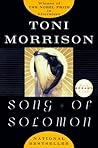 Song of Solomon by Toni Morrison
My rating: 4 of 5 stars
I’ve never read Toni Morrison before, if only because her stature in literature is such that they don’t even bother to write synopses on the back covers of her books, so I was never really sure if her books would be something I might be interested in. But I was inspired to give her the benefit of the doubt a couple of years ago after a visit to the Nobel Museum in Stockholm, which includes a display with a few of her books and a blurb explaining why she was awarded the Nobel Prize. This was already in my to-read pile when she passed away recently, so I decided to plunge ahead.
The novel follows Macon “Milkman” Dead III, who work for his father’s business. He’s not as obsessed with money as his father, but Milkman is a shallow, self-centered man who is emotionally disconnected from his family and everyone else – even his best friend Guitar, who has joined a secret group that avenges the murder of black people when the white murderers are not prosecuted. Things change when his father suspects that Milkman’s aunt Pilate is hiding gold in her house. Milkman’s pursuit of the gold leads him on an unexpected quest of self-discovery.
Morrison’s lyrical narrative style – which also tends to whip back and forth in time without warning – took some getting used to, but her ear for dialogue is absolutely brilliant, and that’s what ultimately roped me in. Which is saying something, as I’m not typically a fan of generational family dramas, but this one has a lot to say, and is full of vivid characters. The first third of the book was a bit of a slog to get through, but it was well worth the effort.
View all my reviews
Goddammit I'ma sing my song,
This is dF
Breakout by Richard StarkMy rating: 4 of 5 stars
Awhile back I started reading Richard Stark’s Parker novels from the beginning. I got as far as #20 (Firebreak), which is when the store I was buying them from stopped carrying them. Anyway, recently I managed to get a copy of #21, and here we are. In this instalment, the title is taken literally – the story opens with Parker in the middle of a heist that’s just gone wrong, and he gets caught and sent to Stoneveldt, a local transit prison that’s never had an escape.
As you might imagine, Parker aims to spoil that record, and starts to put together a plan and a team inside and outside Stoneveldt to bust out. The catch is that one fellow prisoner will only do it if Parker helps him on a heist as soon as they’re out. Remarkably, this sets the stage for not one but three breakouts of different varieties. So you get your money’s worth here.
Stark is probably the only crime writer who could get away with that idea and make it believable. Like with many of the later Parker novels, Stark takes his time building up the story and adding different complexities along the way, but it never feels padded out or forced. It’s a fast-paced and entertaining read – even the third act, which is surprisingly low on action (until the very end), still provides plenty of suspense.
Way Station by Clifford D. SimakMy rating: 4 of 5 stars
I’ve never read Clifford D. Simak before, though I’ve come across his name a lot in the past. A number of people I know have name-checked both him and this 1963 novel as a must-read, and I’m always keen to try authors if enough people whose opinions I trust recommend them. So I picked this up when I came across a copy of it.
The novel has a good hook: Enoch Wallace is a strange hermit in rural Wisconsin who has lived in his house for 100 years but doesn't look a day over 30. Turns out he is the operator of a secret teleportation station inside his home that serves as an interstellar transport hub for the hundreds of alien civilizations in the galaxy. Everything has been going smoothly, but that ends when the CIA start nosing around, Wallace’s hillbilly neighbour starts a feud over his mysterious deaf-mute daughter Lucy, and word arrives that some alien factions want to shut the Earth station down forever. And then there’s the machine that can tap into the spiritual force of the universe that seems to have gone missing …
It sounds like the setup for blockbuster action, but Simak spends much of the novel focusing on the station’s day-to-day operation, the various aliens that pass through, and the loneliness of Wallace, who is isolated from the human race yet not really part of the various alien cultures within Galactic Central. And with Earth on the brink of World War 3, he faces some tough decisions about his own future and that of his home planet. But Simak makes it all work – the focus on Wallace keeps everything grounded in believability for the most part, and apart from a couple of plot holes and slow bits, it’s a pretty solid tale. What other readers will make of it probably depends on whether they like their SF quiet or loud, but for me, I enjoyed it.
The Chameleon Corps and Other Shape Changers by Ron GoulartMy rating: 3 of 5 stars
Continuing my re-reading of the works of Ron Goulart, this one offers a break from the usual routine in that (1) it’s a collection of (mostly) previously published short stories, and (2) the short stories (mostly) all feature people who can change their shape. The first five stories feature the same shape-changer – Ben Jolson of the Chameleon Corps, whose agents can literally change into anyone or anything (Goulart cites Plastic Man as an influence). Those stories are all set in Goulart’s Barnum System universe. The rest of the stories are standalone and more contemporary, except for one that is tangentially related to the Chameleon Corps.
Goulart’s intro for the collection promises “miniature psychodramas kicking around the idea of self” that contemplate the masks we choose to wear to conceal our identities, and what those masks say about the wearer. I’m not sure if he’s kidding or not – the stories here are too superficial to qualify as psychodramatic explorations of self-identity, not least because Goulart’s characterization usually leaves as much to the reader’s imagination as possible. And his approach to just about everything is to not take these narratives too seriously. On the other hand, Pat Cadigan cites Goulart’s Chameleon Corps stories as a big influence on her own writing, so maybe the shallow party here is me.
Anyway, the Chameleon Corps stories are essentially shorter versions of Goulart’s novels – reluctant agent goes on mission, meets oddball characters that lead to the next stage of the mission, etc. They're entertaining enough, but the second section offers a chance to see Goulart do something outside of that template. It’s a bit hit and miss, but some of them are solid short stories that wouldn't be out of place in a Twilight Zone series.
Song of Solomon by Toni MorrisonMy rating: 4 of 5 stars
I’ve never read Toni Morrison before, if only because her stature in literature is such that they don’t even bother to write synopses on the back covers of her books, so I was never really sure if her books would be something I might be interested in. But I was inspired to give her the benefit of the doubt a couple of years ago after a visit to the Nobel Museum in Stockholm, which includes a display with a few of her books and a blurb explaining why she was awarded the Nobel Prize. This was already in my to-read pile when she passed away recently, so I decided to plunge ahead.
The novel follows Macon “Milkman” Dead III, who work for his father’s business. He’s not as obsessed with money as his father, but Milkman is a shallow, self-centered man who is emotionally disconnected from his family and everyone else – even his best friend Guitar, who has joined a secret group that avenges the murder of black people when the white murderers are not prosecuted. Things change when his father suspects that Milkman’s aunt Pilate is hiding gold in her house. Milkman’s pursuit of the gold leads him on an unexpected quest of self-discovery.
Morrison’s lyrical narrative style – which also tends to whip back and forth in time without warning – took some getting used to, but her ear for dialogue is absolutely brilliant, and that’s what ultimately roped me in. Which is saying something, as I’m not typically a fan of generational family dramas, but this one has a lot to say, and is full of vivid characters. The first third of the book was a bit of a slog to get through, but it was well worth the effort.
View all my reviews
Goddammit I'ma sing my song,
This is dF
