![[personal profile]](https://www.dreamwidth.org/img/silk/identity/user.png) defrog
defrogAnd so we begin a new year of whittling down my to-read pile.
As you can see, we’re not off to a great start. On the other hand, I decided to take the pressure off this year and set my Goodreads Reading Challenge target at 27 books. I can probably beat that, but I don't think I can hit my old target of 42 – apart from my weird and increasingly uncertain schedule, many of the books in my queue are not quick reads, and I don’t want to make them seem like work.
So this year I’m going to take my sweet time about it. Which is still “as fast as I can” at this moment in time, so no need to change the title.
And so.
 Go Tell It on the Mountain by James Baldwin
My rating: 4 of 5 stars
This is my first time reading James Baldwin, which I’ve been meaning to do for awhile but kept putting off until I was finally convinced by other writers I’ve been reading recently namedropping him and his work. This is his debut novel – set in 1930s Harlem, the central character is 14-year-old John Grimes, who is struggling with his self-identity at a time when everyone expects him to follow in the footsteps of his stepfather Gabriel – a storefront preacher whom John hates because he is violent and abusive.
However, the first part of John’s story serves as a set-up to explore this family history of Gabriel, his sister Florence and John’s mother Elizabeth, which takes up most of the book until the final scene when John has an epiphany about his identity and his future. The underlying story is self is the stuff of slice-of-life soap operas, but it’s very well written, with solid characters and cracking dialogue. More interestingly for me, it's a vivid depiction of what life was like for many black people in 1930s America, and the role of Christianity and the church in African-American culture.
The latter aspect interests me in part because while I’ve recently read and enjoyed Ta-Nehesi Coates’ writings on racism and black history, he writes from the perspective of an avowed atheist who sees no meaningful value in religion in terms of addressing racism, and thus tends to skirt around it. Baldwin (who grew up in the church and was a preacher himself for a time) puts Christianity front and center here, filling the book with lots of religious language, metaphors and imagery, and portrays the church as both a positive and negative force, offering unity and hope but also repression and hypocrisy. I probably should have read it ages ago, but then – perhaps ironically – I probably would have gotten a lot less out of it in my wild agnostic phase, or at least would have missed the point.
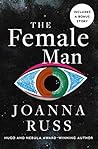 The Female Man by Joanna Russ
My rating: 2 of 5 stars
This is my first time reading Joanna Russ, another of those classic New Wave SF/F authors that gets namedropped by some of my favorite authors, which is why I decided to try this. The story follows four versions of the same woman (ostensibly the author herself) in alternate universes at different periods of time – the modern world (circa early 70s); an alternate Earth where the Great Depression is still happening and WW2 never did; a future Earth called Whileaway where all the men died in a plague 800 years ago; and a different future Earth where men and women are literally at war. The four versions of Joanna mysteriously meet. But why?
The book eventually answers the “why”, but never the “how”, which I assume was not important to Russ, who basically uses the premise as a vehicle to explore the various ways men and patriarchy in general oppress women, as well as what a world without men might be like. Russ writes with genuine and furious anger, and while it might not be inaccurate to call it a radical feminist polemic, it’s not like she had nothing to be angry about. Her descriptions of how men often treated women (especially lesbians) at the time are depressingly accurate, and you don’t have to look too hard to see society hasn’t progressed all that far since then.
Russ’ angry feminism will obviously turn some people off for various reasons – even some feminists think Russ was over the top, and this particular book was TERF before TERF was an acronym (although to be fair, Russ later apologized for this). For me, the main problem with the book is that structure-wise, it's a mess – Russ is juggling four different narrators and it’s rarely clear which one is narrating. Maybe this is intentional in that they’re technically the same person, but it’s still confusing and makes it difficult to follow what’s going on and why, especially as they go from world to world for unclear reasons, and as though time travel and plane-hopping are no big deal in themselves. Still, there are a lot of good and interesting things in here that sort of cohere by the end.
NOTE: This particular edition includes her award-winning short story “When It Changed”, which was included in Harlan Ellison’s™ Again, Dangerous Visions and was written before TFM but is set in the Whileaway universe and features Janet Evason (the version of Joanna from that universe). I liked it, though I think reading the novel first helped me understand what was going on and what was at stake. Which is ironic given how hard the book is to follow. So it goes.
View all my reviews
Whileaway the hours,
This is dF
As you can see, we’re not off to a great start. On the other hand, I decided to take the pressure off this year and set my Goodreads Reading Challenge target at 27 books. I can probably beat that, but I don't think I can hit my old target of 42 – apart from my weird and increasingly uncertain schedule, many of the books in my queue are not quick reads, and I don’t want to make them seem like work.
So this year I’m going to take my sweet time about it. Which is still “as fast as I can” at this moment in time, so no need to change the title.
And so.
Go Tell It on the Mountain by James BaldwinMy rating: 4 of 5 stars
This is my first time reading James Baldwin, which I’ve been meaning to do for awhile but kept putting off until I was finally convinced by other writers I’ve been reading recently namedropping him and his work. This is his debut novel – set in 1930s Harlem, the central character is 14-year-old John Grimes, who is struggling with his self-identity at a time when everyone expects him to follow in the footsteps of his stepfather Gabriel – a storefront preacher whom John hates because he is violent and abusive.
However, the first part of John’s story serves as a set-up to explore this family history of Gabriel, his sister Florence and John’s mother Elizabeth, which takes up most of the book until the final scene when John has an epiphany about his identity and his future. The underlying story is self is the stuff of slice-of-life soap operas, but it’s very well written, with solid characters and cracking dialogue. More interestingly for me, it's a vivid depiction of what life was like for many black people in 1930s America, and the role of Christianity and the church in African-American culture.
The latter aspect interests me in part because while I’ve recently read and enjoyed Ta-Nehesi Coates’ writings on racism and black history, he writes from the perspective of an avowed atheist who sees no meaningful value in religion in terms of addressing racism, and thus tends to skirt around it. Baldwin (who grew up in the church and was a preacher himself for a time) puts Christianity front and center here, filling the book with lots of religious language, metaphors and imagery, and portrays the church as both a positive and negative force, offering unity and hope but also repression and hypocrisy. I probably should have read it ages ago, but then – perhaps ironically – I probably would have gotten a lot less out of it in my wild agnostic phase, or at least would have missed the point.
The Female Man by Joanna RussMy rating: 2 of 5 stars
This is my first time reading Joanna Russ, another of those classic New Wave SF/F authors that gets namedropped by some of my favorite authors, which is why I decided to try this. The story follows four versions of the same woman (ostensibly the author herself) in alternate universes at different periods of time – the modern world (circa early 70s); an alternate Earth where the Great Depression is still happening and WW2 never did; a future Earth called Whileaway where all the men died in a plague 800 years ago; and a different future Earth where men and women are literally at war. The four versions of Joanna mysteriously meet. But why?
The book eventually answers the “why”, but never the “how”, which I assume was not important to Russ, who basically uses the premise as a vehicle to explore the various ways men and patriarchy in general oppress women, as well as what a world without men might be like. Russ writes with genuine and furious anger, and while it might not be inaccurate to call it a radical feminist polemic, it’s not like she had nothing to be angry about. Her descriptions of how men often treated women (especially lesbians) at the time are depressingly accurate, and you don’t have to look too hard to see society hasn’t progressed all that far since then.
Russ’ angry feminism will obviously turn some people off for various reasons – even some feminists think Russ was over the top, and this particular book was TERF before TERF was an acronym (although to be fair, Russ later apologized for this). For me, the main problem with the book is that structure-wise, it's a mess – Russ is juggling four different narrators and it’s rarely clear which one is narrating. Maybe this is intentional in that they’re technically the same person, but it’s still confusing and makes it difficult to follow what’s going on and why, especially as they go from world to world for unclear reasons, and as though time travel and plane-hopping are no big deal in themselves. Still, there are a lot of good and interesting things in here that sort of cohere by the end.
NOTE: This particular edition includes her award-winning short story “When It Changed”, which was included in Harlan Ellison’s™ Again, Dangerous Visions and was written before TFM but is set in the Whileaway universe and features Janet Evason (the version of Joanna from that universe). I liked it, though I think reading the novel first helped me understand what was going on and what was at stake. Which is ironic given how hard the book is to follow. So it goes.
View all my reviews
Whileaway the hours,
This is dF
