The book reports, they are here.
============================================================
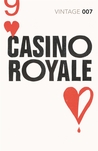 Casino Royale
 by
Ian FlemingMy rating:
2 of 5 starsI should probably start by pointing out a few things:
1. This is my first attempt at reading any of the Bond books.
2. I bought a copy of
Casino Royale to fulfill a Buy 2 Get 1 Free offer.
3. Knowing full well that the film franchise never followed the books that closely, I was curious to see Bond as his author intended.
In that respect, it was educational, and the story itself is pretty good, though the ending is a bit hammy. The two-star rating is the result of two things: (1) Fleming’s tendency to over-describe characters and settings in detail, and (2) doing it in a way that sounds like a luxury snob bragging about how much he knows about Bentleys, martinis and Baccarat. I understand why Fleming wrote Bond the way he did, why the details matter, and why the series was a hit, but I find tedious to the point of interfering with the story. I know Bond is more of a hitman than a proper spy, so the comparison is unfair, but I get a lot more enjoyment out of Len Deighton’s Harry Palmer/Bernard Samson espionage novels than I did from this.
 The Human Factor
 by
Graham GreeneMy rating:
5 of 5 starsAnother subtle espionage tale from Greene, this one from the late 70s. The premise is familiar – MI6 has discovered a leak in Section 6A, but is it Maurice Castle, the quiet senior man in charge, or his flamboyant assistant Davis? And what if they suspect the wrong man? – but Greene’s take is focused less on action and more on the psychology of the characters involved, from Castle and his African wife Sarah to Daintry (the security chief tasked with rooting out the double agent) and Dr Percival (the ice-cold senior official for whom assassination is just a tool in a toolbox to solve a problem). It’s a brilliant exploration of what it must be like to be a double agent, particularly one who is not motivated by politics or money, but love and gratitude, and yet well paced enough to keep the espionage angle going.
 The Big Short: Inside The Doomsday Machine
 by
Michael LewisMy rating:
3 of 5 starsI’ve sort of had Michael Lewis on my radar for awhile after a couple of friends recommended him, even though books about Wall Street aren’t really my bag. But having recently read a book on the 2008 financial crisis this one caught my eye. It focuses on a handful of investors who not only saw the 2008 financial meltdown coming, but also bet their money on it – and made millions. It’s an interesting story with a cast of colorful characters, but it does require wading through a lot of financial terminology and acronyms. If nothing else, it makes a nice companion book to Bethany McLean and Joseph Nocera’s
All The Devils Are Here.  How to Win an Election: An Ancient Guide for Modern Politicians
 by
Quintus Tullius CiceroMy rating:
4 of 5 starsThe title is self-explanatory. Essentially it’s a letter written by Quintus Tullius Cicero to his brother Marcus, who was running for the office of consul of the Roman Republic, advising him on the finer points of political campaigning. It’s a short and educational read (depending on how much you know about ancient Rome), and it will sound remarkably familiar to anyone who follows politics seriously enough to become as cynical about it as I have. For that reason alone, I can’t recommend it enough, though I admit I’m not sure if it’s troubling or comforting to know that election campaigns have been based on mudslinging, empty promises and kissing up to the wealthy and powerful for over 2,000 years. Still, this should be required reading for high school students.
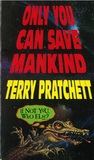 Only You Can Save Mankind
 by
Terry PratchettMy rating:
3 of 5 starsI’m on and off with Pratchett’s Discworld books, but I do like reading him, and I picked this up at a charity book sale to see how Pratchett does at YA fiction. The answer: pretty good. The story idea is deceptively simple: Johnny Maxwell, age 12, is playing a computer game that involves defending Earth from an alien Starfleet. Unexpectedly, they surrender, after which the line between reality and gamespace get very blurred indeed. I confess I didn’t find the story especially engaging. It’s probably because I’m too old, and/or because I find the Discworld books an overall richer experience in comparison. Still, Pratchett makes up for that with a third act that makes for a decent payoff, and by working in an amazing amount of genre-specific references (without directly naming any of them) and using them to critique videogame violence and coverage of the 1991 Iraq War. Pretty good for a kids’ book.
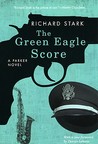 The Green Eagle Score
 by
Richard StarkMy rating:
4 of 5 starsThe tenth book in the Parker series, in which Parker is called in on a plan to steal the payroll from an Air Force base. The hitch – and there always is one – is an uneasy love triangle between Marty Fusco (the pro who contacted Parker about the job), Stan Devers (the amateur inside man) and Ellen Fusco (Marty’s neurotic ex-wife, who is now shacking up with Devers). About halfway through Stark lets you know what’s coming, but still manages to put enough of a twist in it to keep you guessing how it’s going to play out. Nicely done, as usual.
View all my reviewsHow to steal a million,
This is dF
![[personal profile]](https://www.dreamwidth.org/img/silk/identity/user.png)
