![[personal profile]](https://www.dreamwidth.org/img/silk/identity/user.png) defrog
defrogAnd so, thanks to the holidays, I obviously got some reading done. Which means I can now say I read 70 books in 2013.
Which is nothing, compared to some of you, I know. Still, it’s not like we're in a competition or anything.
And so, book reports!
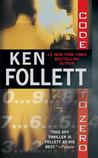 Code to Zero by Ken Follett
My rating: 2 of 5 stars
This is my first time reading Follett, who comes recommended by a few people I know. I came across this for cheap at a book fair and liked the idea on the book jacket: in January 1958, in the heat of the Space Race against the Russians, the launch of Explorer 1 (carrying America's first artificial satellite) was delayed twice because of weather, even though the sky was perfectly clear. The real reason lies in the mind of Luke, a rocket scientist who wakes up in a men’s room with his memory erased. Great pitch, but I didn’t get much out of it. Most of it is standard thriller material covering well-trodden ground, especially as Luke turns out to be more Jason Bourne than nerdy rocket scientist. Follett does play around some with the idea of losing yr memory and learning that you were actually kind of a jerk, but spends more time on the action and the standard relationship drama between the five Harvard friends ultimately involved in the plot. I will say that Follett is a good writer who knows how to keep you turning the pages. But I’m not sure if I’ll try him again.
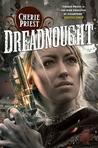 Dreadnought by Cherie Priest
My rating: 3 of 5 stars
The second book in Priest’s Clockwork Century series, which mashes up steampunk, Westerns, alternative Civil War history and zombies. This one follows Mercy Lynch, a nurse on the CFA side of the Civil War in Virginia who learns that her father, thought long dead, is alive but dying in Seattle. Getting there involves booking passage on a Union train, the Dreadnought. But it’s anything but a smooth ride, as the train is attacked by Rebel soldiers who seem very interested in the Dreadnought's secret cargo – and someone on the train seems to be helping them. It’s not a bad book, but it does suffer in comparison to Boneshaker, which was a fresh mash-up of genres filled with colorful characters. Dreadnought plays more like a standard wartime train-heist Western for the first half or so – it’s only in the latter half that the action picks up and we start seeing more of the steampunk sci-fi/fantasy elements that made Boneshaker interesting. Also, Mercy Lynch is a great character, but too many characters on the train aren’t as memorable. The climax and ending are worth the effort, but it is an effort.
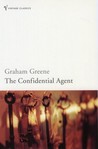 The Confidential Agent by Graham Greene
My rating: 3 of 5 stars
Spy thriller in which an agent known only as D. – who is on the loyalist side of a brutal civil war in his home country – is on a secret mission to England to purchase coal. Things start to go wrong before he can even get off the ship, where he spots rival agent L. apparently out to stop the deal from happening. Before long D. has been beaten up, shot at, robbed and framed for murder. Greene wrote the novel in six weeks whilst on speed, and in many ways it shows – partly from the number of complications that pile up (although they’re very entertaining), but mainly from Greene relying a bit too much on coincidence to keep things moving. Also, the love interest isn’t much more than that, and not all that convincing. On the other hand, D. is a very compelling protagonist. He’s everything James Bond isn’t – worn down by war, imprisonment and the death of his wife, he’s not so much inept an agent as he is unlucky, and spends most of the story convinced that doom is right around the corner. Flawed, but never dull.
 The War of the Worlds by H.G. Wells
My rating: 5 of 5 stars
The Martian invasion meme begins here. And all this time, I’d never read it, mainly because I already knew the ending. But eventually I got around to reading it, and I have to say, it deserves its reputation as a masterpiece. What’s really striking to me is that having seen film versions and heard the Welles radio drama – all of which change the story and set it in contemporary times – the story seems all the more original within its original Victorian England setting. News travels slow, and well after the first cylinder lands and the heat ray is deployed, most people seem unaware that anything is seriously wrong, and simply carry on like Englishmen, as one does. Like the best science fiction, it’s social satire of the highest order, even though Wells plays it straight.
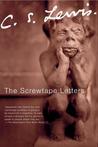 The Screwtape Letters by C.S. Lewis
My rating: 4 of 5 stars
This is a re-read for me. I originally read it in the late 80s after finding a used copy in the sound booth of an amusement park theatre. (No, really.) I liked it at the time, but I didn’t know that CS Lewis was writing as a devout Christian. Having come across another copy recently, I thought it was time to reread it from that perspective. Whether it’s because I’m older, better informed or more open-minded, I found I appreciate what Lewis was attempting. The letters from senior demon Screwtape to nephew and junior tempter Wormwood advising him on the temptation of a British man (i.e. “the patient”) are a masterclass of satire, and a brilliant illustration of the nature of temptation, the relationship between God, Satan and man, what draws us away from one and towards the other. Whether you agree with Lewis is another matter, obviously. And readers expecting the kind of demonic activity and mayhem that you usually get from movies and the average Hellblazer arc may find this really disappointing. But I don’t think you have to be a Christian to get something out of this book.
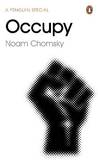 Occupy by Noam Chomsky
My rating: 2 of 5 stars
Originally a Zucotti Park Press pamphlet and republished by Penguin (a major corporation, incidentally – there’s irony for you), this is one of those Chomsky books that isn’t written by him but contains speeches and interview transcripts – and, in this case, a Chomsky-penned obituary of Howard Zinn and a “what to do if the police arrest you” guide from the National Lawyer’s Guild. Like most other Chomsky books in this format, it does a good job of outlining Chomsky’s basic views on the topic. The downsides, as usual, are (1) it gets repetitive, and (2) the interviews are very softball and deferential. Still, it does contain some very good observations on the nature of the Occupy movement, and also gets points for Chomsky’s advice that while change is possible, it’s also hard work and will take many, many years to accomplish.
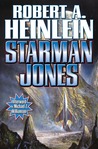 Starman Jones by Robert A. Heinlein
My rating: 4 of 5 stars
My introduction to Heinlein as a teenager was via his “juvenile” novels like Between Planets, Space Cadet and (of course) Starship Troopers. I hadn’t read this one before, and it reminded me how much I enjoyed reading him when I was younger. Starman Jones deploys the Horatio-Alger template – brilliant but dirt-poor farmboy runs away from home, cons his way onto a ship and, via hard work and dumb luck, eventually ends up Captain. It’s pure space-adventure, and very well done, despite the occasional lag in pace. It’s also a textbook demonstration of how that the best “young adult” novels (as they’re known today) are the ones that work for grown-ups as well as the kids.
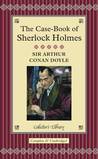 The Case-Book of Sherlock Holmes by Arthur Conan Doyle
My rating: 3 of 5 stars
This is the final collection of Holmes stories, and I have to say, it’s the weakest of the series. That’s no real surprise – Doyle himself had wearied of the character by this stage, and while some of the stories are quite good, others feel by-the-numbers or rushed. On the plus side, Doyle did attempt to fool with the formula a bit by having Holmes take over narration duties for a couple of stories, and even writing one in third-person. Still, it says a lot that the narration shift doesn’t really affect the quality of the story (which is to say it doesn’t improve things, but it doesn’t hurt either). Anyway, I can now officially say that I have read every Sherlock Holmes story ever written.
Case closed,
This is dF
Which is nothing, compared to some of you, I know. Still, it’s not like we're in a competition or anything.
And so, book reports!
Code to Zero by Ken FollettMy rating: 2 of 5 stars
This is my first time reading Follett, who comes recommended by a few people I know. I came across this for cheap at a book fair and liked the idea on the book jacket: in January 1958, in the heat of the Space Race against the Russians, the launch of Explorer 1 (carrying America's first artificial satellite) was delayed twice because of weather, even though the sky was perfectly clear. The real reason lies in the mind of Luke, a rocket scientist who wakes up in a men’s room with his memory erased. Great pitch, but I didn’t get much out of it. Most of it is standard thriller material covering well-trodden ground, especially as Luke turns out to be more Jason Bourne than nerdy rocket scientist. Follett does play around some with the idea of losing yr memory and learning that you were actually kind of a jerk, but spends more time on the action and the standard relationship drama between the five Harvard friends ultimately involved in the plot. I will say that Follett is a good writer who knows how to keep you turning the pages. But I’m not sure if I’ll try him again.
Dreadnought by Cherie PriestMy rating: 3 of 5 stars
The second book in Priest’s Clockwork Century series, which mashes up steampunk, Westerns, alternative Civil War history and zombies. This one follows Mercy Lynch, a nurse on the CFA side of the Civil War in Virginia who learns that her father, thought long dead, is alive but dying in Seattle. Getting there involves booking passage on a Union train, the Dreadnought. But it’s anything but a smooth ride, as the train is attacked by Rebel soldiers who seem very interested in the Dreadnought's secret cargo – and someone on the train seems to be helping them. It’s not a bad book, but it does suffer in comparison to Boneshaker, which was a fresh mash-up of genres filled with colorful characters. Dreadnought plays more like a standard wartime train-heist Western for the first half or so – it’s only in the latter half that the action picks up and we start seeing more of the steampunk sci-fi/fantasy elements that made Boneshaker interesting. Also, Mercy Lynch is a great character, but too many characters on the train aren’t as memorable. The climax and ending are worth the effort, but it is an effort.
The Confidential Agent by Graham GreeneMy rating: 3 of 5 stars
Spy thriller in which an agent known only as D. – who is on the loyalist side of a brutal civil war in his home country – is on a secret mission to England to purchase coal. Things start to go wrong before he can even get off the ship, where he spots rival agent L. apparently out to stop the deal from happening. Before long D. has been beaten up, shot at, robbed and framed for murder. Greene wrote the novel in six weeks whilst on speed, and in many ways it shows – partly from the number of complications that pile up (although they’re very entertaining), but mainly from Greene relying a bit too much on coincidence to keep things moving. Also, the love interest isn’t much more than that, and not all that convincing. On the other hand, D. is a very compelling protagonist. He’s everything James Bond isn’t – worn down by war, imprisonment and the death of his wife, he’s not so much inept an agent as he is unlucky, and spends most of the story convinced that doom is right around the corner. Flawed, but never dull.
The War of the Worlds by H.G. WellsMy rating: 5 of 5 stars
The Martian invasion meme begins here. And all this time, I’d never read it, mainly because I already knew the ending. But eventually I got around to reading it, and I have to say, it deserves its reputation as a masterpiece. What’s really striking to me is that having seen film versions and heard the Welles radio drama – all of which change the story and set it in contemporary times – the story seems all the more original within its original Victorian England setting. News travels slow, and well after the first cylinder lands and the heat ray is deployed, most people seem unaware that anything is seriously wrong, and simply carry on like Englishmen, as one does. Like the best science fiction, it’s social satire of the highest order, even though Wells plays it straight.
The Screwtape Letters by C.S. LewisMy rating: 4 of 5 stars
This is a re-read for me. I originally read it in the late 80s after finding a used copy in the sound booth of an amusement park theatre. (No, really.) I liked it at the time, but I didn’t know that CS Lewis was writing as a devout Christian. Having come across another copy recently, I thought it was time to reread it from that perspective. Whether it’s because I’m older, better informed or more open-minded, I found I appreciate what Lewis was attempting. The letters from senior demon Screwtape to nephew and junior tempter Wormwood advising him on the temptation of a British man (i.e. “the patient”) are a masterclass of satire, and a brilliant illustration of the nature of temptation, the relationship between God, Satan and man, what draws us away from one and towards the other. Whether you agree with Lewis is another matter, obviously. And readers expecting the kind of demonic activity and mayhem that you usually get from movies and the average Hellblazer arc may find this really disappointing. But I don’t think you have to be a Christian to get something out of this book.
Occupy by Noam ChomskyMy rating: 2 of 5 stars
Originally a Zucotti Park Press pamphlet and republished by Penguin (a major corporation, incidentally – there’s irony for you), this is one of those Chomsky books that isn’t written by him but contains speeches and interview transcripts – and, in this case, a Chomsky-penned obituary of Howard Zinn and a “what to do if the police arrest you” guide from the National Lawyer’s Guild. Like most other Chomsky books in this format, it does a good job of outlining Chomsky’s basic views on the topic. The downsides, as usual, are (1) it gets repetitive, and (2) the interviews are very softball and deferential. Still, it does contain some very good observations on the nature of the Occupy movement, and also gets points for Chomsky’s advice that while change is possible, it’s also hard work and will take many, many years to accomplish.
Starman Jones by Robert A. HeinleinMy rating: 4 of 5 stars
My introduction to Heinlein as a teenager was via his “juvenile” novels like Between Planets, Space Cadet and (of course) Starship Troopers. I hadn’t read this one before, and it reminded me how much I enjoyed reading him when I was younger. Starman Jones deploys the Horatio-Alger template – brilliant but dirt-poor farmboy runs away from home, cons his way onto a ship and, via hard work and dumb luck, eventually ends up Captain. It’s pure space-adventure, and very well done, despite the occasional lag in pace. It’s also a textbook demonstration of how that the best “young adult” novels (as they’re known today) are the ones that work for grown-ups as well as the kids.
The Case-Book of Sherlock Holmes by Arthur Conan DoyleMy rating: 3 of 5 stars
This is the final collection of Holmes stories, and I have to say, it’s the weakest of the series. That’s no real surprise – Doyle himself had wearied of the character by this stage, and while some of the stories are quite good, others feel by-the-numbers or rushed. On the plus side, Doyle did attempt to fool with the formula a bit by having Holmes take over narration duties for a couple of stories, and even writing one in third-person. Still, it says a lot that the narration shift doesn’t really affect the quality of the story (which is to say it doesn’t improve things, but it doesn’t hurt either). Anyway, I can now officially say that I have read every Sherlock Holmes story ever written.
Case closed,
This is dF
