![[personal profile]](https://www.dreamwidth.org/img/silk/identity/user.png) defrog
defrogThere’s a strange irony in the fact that I get the most books read during the shortest month of the year.
And so:
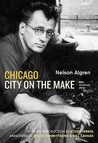 Chicago: City on the Make by Nelson Algren
My rating: 5 of 5 stars
Algren’s infamous warts-and-all lyrical love letter to Chicago, in which he basically sums up the city’s crooked history as “a rigged ballgame” – an ongoing struggle between the hustlers and the squares, swindlers and victims, moral hypocrites and desperate low-lifes, capitalist barons and working-class slobs, where corruption is rewarded and sympathy for the losers generally absent. And yet for all that, Algren loves Chicago, but says you can’t really love it unless you embrace it for what it is, good and bad. There’s little doubt whose side Algren is on, so readers of a certain political persuasion are going to hate this book on principle. For myself, I happen to like both Algren and Chicago, so I really enjoyed it. Algren wears his passion on his sleeve, and it’s catching. I will say that the book, while short, takes some work thanks to Algren’s poetic references to historical figures and events, although the 60th Anniversary edition does come with helpful endnotes explaining everything. But it’s well worth the effort.
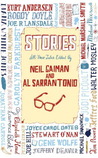 Stories by Neil Gaiman
My rating: 2 of 5 stars
I’ll admit I picked up this anthology partly because Neil Gaiman is a co-editor. But it also helped that it had a promising list of authors, some of whom I like (Lawrence Block, Joe R. Lansdale, Gene Wolfe, Joe Hill) and others I hadn’t read but wouldn’t mind sampling. Also, the anthology has two appealing hooks: (1) all the stories are new, and (2) the overall theme was simply stories that make you say, “And then what happened?” Unfortunately, many of them don’t live up to those four words – not for me, anyway. Part of the problem is that the stories span such a wide range of genres that inevitably some of them cover topics that I wouldn’t normally read – and none of those stories had a good enough hook to keep me interested. So I ended up skimming a lot. There are certainly some good stories here, but no real knockouts, and I think you’d have to have incredibly diverse taste to enjoy all of them.
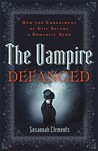 The Vampire Defanged: How the Embodiment of Evil Became a Romantic Hero by Susannah Clements
My rating: 3 of 5 stars
A pop-academic study of how vampires in pop culture have transformed from the demonic monster of Bram Stoker’s Dracula to the romantic, sparkly heartthrob of Twilight. First things first: this is written from a Christian point of view, so much of the focus is on how vampires went from Christian metaphors of sin and evil to secular, sympathetic heroes, and what this means for Christians trying to make sense of the popularity of vampires. So that’s going to be a roadblock for some people. If it helps, the book is not a right-wing rant on the evils of vampire occult pop culture corrupting America’s youth. Clements approaches the subject with reasonable objectivity, and actually does a good job breaking down the evolution of vampire portrayals over the last century via milestones such as Anne Rice, Buffy The Vampire Slayer and Sookie Stackhouse. It’s not without weaknesses, one being that it doesn't really take into account the fact that much of the evolution of vampire stories arguably owes more to writers and filmmakers simply trying to think of new ways to write about vampires – or find new ways to scare people – rather than any particular intention of de-emphasizing religious symbolism. Clements does acknowledge this, but personally I don’t think she gives it enough weight. Anyway, for vampire fans who at least agree that vampires should be less sparkly and more scary, this is an interesting roadmap of how we got here, and an alternate argument for reversing that trend. A final note: it does help if you’ve read or watched the books, films and TV shows covered, if only because there are spoilers.
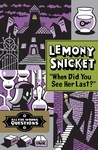 When Did You See Her Last? by Lemony Snicket
My rating: 3 of 5 stars
The second installment of Lemony Snicket’s All The Wrong Questions series, which continues the saga of 13-year-old Snicket’s apprenticeship in the VFD, and basically takes up where the first installment left off. Still in Stain’d-By-The-Sea with his inept chaperone, their new mission is to find Cleo Knight, a local girl and brilliant chemist who has gone missing. It’s literally a continuation of the first book, with most of the same characters and running jokes, and the same underlying mysterious story arc involving Snicket’s sister Kit. This is not a bad thing as long as you think of it as all one big story – which it essentially is. So if you liked the first one, you’ll probably like this. And it’s really Snicket’s whimsical, slightly melancholy storytelling style that makes it entertaining for me.
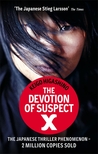 The Devotion of Suspect X by Keigo Higashino
My rating: 3 of 5 stars
Billed as one of the most popular books in Japan when it was first published, I thought I’d give this a try after the bride read one of Keigo Higashino’s other books and said he was pretty good. The story involves Yasuko, a former nightclub hostess who kills her abusive ex-husband. Her neighbor Ishigami, a high school math teacher, offers to help her conceal the murder. So the mystery isn’t the identity of the killer, but the orchestration of the cover-up. What follows is some serious cat-and-mouse as police detective Kusanagi and his friend Yukawa (a physicist and occasional police consultant) try to find holes in Yasuko’s alibi. The first half of the book feels somewhat by-the-numbers – to include Ishigami’s motives for helping Yasuko – but as pieces of the puzzle start falling into place, the plot gets interesting once you realize it’s not going where you thought it was. Like a lot of Japanese murder mysteries, the intricate complexity of the crime is a little over the top. On the other hand, it works. If nothing else, it’s crafted to keep you turning the pages.
 Monsieur Pain by Roberto Bolaño
My rating: 2 of 5 stars
This is my first attempt at Bolano, but it may have been a mistake to start with this early novel (his second written work but the first to be published). Billed as a Surrealist noir conspiracy tale, the title character/narrator is a Mesmerist in 1938 Paris asked by a lady friend to heal Cesar Vallejo (a real Chilean poet), who is dying from hiccups. But Pain is warned off the case by mysterious Spaniards who bribe him to forget the whole thing. Everything gets increasingly weird and unclear from there – and frustratingly so. The more information is revealed, the more the narrative seems to go nowhere, with no explanations forthcoming. Admittedly it’s an almost refreshingly unconventional take on this sort of tale – many of us encounter mysteries that we never find out the answer to, because we’re not master detectives. But too often the Surrealism feels self-indulgent, which makes it an unsatisfying read (at least to me). I’m bearing in mind this is an early work, and there are a few interesting scenes and characters, so I might try one of Bolano’s later novels, but it’s not going to be a big priority anytime soon.
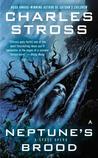 Neptune's Brood by Charles Stross
My rating: 3 of 5 stars
Equal parts space opera and interstellar economics thought experiment, this novel follows Krina Alizond-114, a post-human economics historian with a major in bank fraud, who is searching for her missing sister Ana. Along the way she encounters religious zombies, insurance underwriter pirates, mermaids, and a doppelganger assassin as the plot unfolds to reveal that no one is what they seem – to include Krina and Ana, who have a secret mission that could rock the universe. Credit to Stross for daring to tackle the one aspect of interstellar space operas that no one really touches on – i.e. the insane expense involved, the need for an interstellar banking system and the kind of currency you’d need. But if economics bores you, this may not be your cup of tea. For myself, I admit I skimmed a lot of the economic parts, and I found the plot a little too complicated to be totally believable. Still, as usual, Stross has a lot of fun with it, so it’s a reasonably entertaining read. Bonus points for the sly Monty Python reference.
It’s all about the Benjamins,
This is dF
And so:
Chicago: City on the Make by Nelson AlgrenMy rating: 5 of 5 stars
Algren’s infamous warts-and-all lyrical love letter to Chicago, in which he basically sums up the city’s crooked history as “a rigged ballgame” – an ongoing struggle between the hustlers and the squares, swindlers and victims, moral hypocrites and desperate low-lifes, capitalist barons and working-class slobs, where corruption is rewarded and sympathy for the losers generally absent. And yet for all that, Algren loves Chicago, but says you can’t really love it unless you embrace it for what it is, good and bad. There’s little doubt whose side Algren is on, so readers of a certain political persuasion are going to hate this book on principle. For myself, I happen to like both Algren and Chicago, so I really enjoyed it. Algren wears his passion on his sleeve, and it’s catching. I will say that the book, while short, takes some work thanks to Algren’s poetic references to historical figures and events, although the 60th Anniversary edition does come with helpful endnotes explaining everything. But it’s well worth the effort.
Stories by Neil GaimanMy rating: 2 of 5 stars
I’ll admit I picked up this anthology partly because Neil Gaiman is a co-editor. But it also helped that it had a promising list of authors, some of whom I like (Lawrence Block, Joe R. Lansdale, Gene Wolfe, Joe Hill) and others I hadn’t read but wouldn’t mind sampling. Also, the anthology has two appealing hooks: (1) all the stories are new, and (2) the overall theme was simply stories that make you say, “And then what happened?” Unfortunately, many of them don’t live up to those four words – not for me, anyway. Part of the problem is that the stories span such a wide range of genres that inevitably some of them cover topics that I wouldn’t normally read – and none of those stories had a good enough hook to keep me interested. So I ended up skimming a lot. There are certainly some good stories here, but no real knockouts, and I think you’d have to have incredibly diverse taste to enjoy all of them.
The Vampire Defanged: How the Embodiment of Evil Became a Romantic Hero by Susannah ClementsMy rating: 3 of 5 stars
A pop-academic study of how vampires in pop culture have transformed from the demonic monster of Bram Stoker’s Dracula to the romantic, sparkly heartthrob of Twilight. First things first: this is written from a Christian point of view, so much of the focus is on how vampires went from Christian metaphors of sin and evil to secular, sympathetic heroes, and what this means for Christians trying to make sense of the popularity of vampires. So that’s going to be a roadblock for some people. If it helps, the book is not a right-wing rant on the evils of vampire occult pop culture corrupting America’s youth. Clements approaches the subject with reasonable objectivity, and actually does a good job breaking down the evolution of vampire portrayals over the last century via milestones such as Anne Rice, Buffy The Vampire Slayer and Sookie Stackhouse. It’s not without weaknesses, one being that it doesn't really take into account the fact that much of the evolution of vampire stories arguably owes more to writers and filmmakers simply trying to think of new ways to write about vampires – or find new ways to scare people – rather than any particular intention of de-emphasizing religious symbolism. Clements does acknowledge this, but personally I don’t think she gives it enough weight. Anyway, for vampire fans who at least agree that vampires should be less sparkly and more scary, this is an interesting roadmap of how we got here, and an alternate argument for reversing that trend. A final note: it does help if you’ve read or watched the books, films and TV shows covered, if only because there are spoilers.
When Did You See Her Last? by Lemony SnicketMy rating: 3 of 5 stars
The second installment of Lemony Snicket’s All The Wrong Questions series, which continues the saga of 13-year-old Snicket’s apprenticeship in the VFD, and basically takes up where the first installment left off. Still in Stain’d-By-The-Sea with his inept chaperone, their new mission is to find Cleo Knight, a local girl and brilliant chemist who has gone missing. It’s literally a continuation of the first book, with most of the same characters and running jokes, and the same underlying mysterious story arc involving Snicket’s sister Kit. This is not a bad thing as long as you think of it as all one big story – which it essentially is. So if you liked the first one, you’ll probably like this. And it’s really Snicket’s whimsical, slightly melancholy storytelling style that makes it entertaining for me.
The Devotion of Suspect X by Keigo HigashinoMy rating: 3 of 5 stars
Billed as one of the most popular books in Japan when it was first published, I thought I’d give this a try after the bride read one of Keigo Higashino’s other books and said he was pretty good. The story involves Yasuko, a former nightclub hostess who kills her abusive ex-husband. Her neighbor Ishigami, a high school math teacher, offers to help her conceal the murder. So the mystery isn’t the identity of the killer, but the orchestration of the cover-up. What follows is some serious cat-and-mouse as police detective Kusanagi and his friend Yukawa (a physicist and occasional police consultant) try to find holes in Yasuko’s alibi. The first half of the book feels somewhat by-the-numbers – to include Ishigami’s motives for helping Yasuko – but as pieces of the puzzle start falling into place, the plot gets interesting once you realize it’s not going where you thought it was. Like a lot of Japanese murder mysteries, the intricate complexity of the crime is a little over the top. On the other hand, it works. If nothing else, it’s crafted to keep you turning the pages.
Monsieur Pain by Roberto BolañoMy rating: 2 of 5 stars
This is my first attempt at Bolano, but it may have been a mistake to start with this early novel (his second written work but the first to be published). Billed as a Surrealist noir conspiracy tale, the title character/narrator is a Mesmerist in 1938 Paris asked by a lady friend to heal Cesar Vallejo (a real Chilean poet), who is dying from hiccups. But Pain is warned off the case by mysterious Spaniards who bribe him to forget the whole thing. Everything gets increasingly weird and unclear from there – and frustratingly so. The more information is revealed, the more the narrative seems to go nowhere, with no explanations forthcoming. Admittedly it’s an almost refreshingly unconventional take on this sort of tale – many of us encounter mysteries that we never find out the answer to, because we’re not master detectives. But too often the Surrealism feels self-indulgent, which makes it an unsatisfying read (at least to me). I’m bearing in mind this is an early work, and there are a few interesting scenes and characters, so I might try one of Bolano’s later novels, but it’s not going to be a big priority anytime soon.
Neptune's Brood by Charles StrossMy rating: 3 of 5 stars
Equal parts space opera and interstellar economics thought experiment, this novel follows Krina Alizond-114, a post-human economics historian with a major in bank fraud, who is searching for her missing sister Ana. Along the way she encounters religious zombies, insurance underwriter pirates, mermaids, and a doppelganger assassin as the plot unfolds to reveal that no one is what they seem – to include Krina and Ana, who have a secret mission that could rock the universe. Credit to Stross for daring to tackle the one aspect of interstellar space operas that no one really touches on – i.e. the insane expense involved, the need for an interstellar banking system and the kind of currency you’d need. But if economics bores you, this may not be your cup of tea. For myself, I admit I skimmed a lot of the economic parts, and I found the plot a little too complicated to be totally believable. Still, as usual, Stross has a lot of fun with it, so it’s a reasonably entertaining read. Bonus points for the sly Monty Python reference.
It’s all about the Benjamins,
This is dF
