![[personal profile]](https://www.dreamwidth.org/img/silk/identity/user.png) defrog
defrogBooks and books and books and books and books!
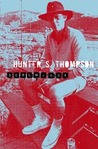 Screwjack by Hunter S. Thompson
My rating: 2 of 5 stars
One of the few HST books I haven’t read yet, mainly due to economics – I couldn’t see paying the full trade-paperback price for a 60-page book with three short pieces. Finally I got a cheap copy, and I have to say it was worthwhile only in that it was a fast way to put me another book ahead in my 2016 Reading Challenge. The first story, “Mescalito” – about his first experience with mescaline – is actually classic HST, but it also appears in Songs of the Doomed: More Notes on the Death of the American Dream, so if you have that you don’t need this. The other two stories are slivers of flash fiction that are visceral but not necessarily in a good way, although even here HST’s writing style remains a joy for me. But I can get it elsewhere and in better quality. By no means essential.
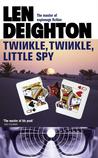 Twinkle, Twinkle, Little Spy by Len Deighton
My rating: 3 of 5 stars
(NOTE: My copy is entitled Catch A Falling Spy, which is the US title for the same book.) Like Spy Story, this is another of Deighton’s “nameless hero” novels that isn’t about Harry Palmer. It may not even be the same guy in in Spy Story, but it arguably doesn't matter since the main focus of the book is CIA agent Major Mickey Mann, who is working with the unnamed British agent to aid in the defection of Andrei Bekuv, a Russian scientist searching the skies for alien life who may know who is leaking classified US science documents to the Kremlin. Naturally, what appears to be a simple defection operation turns out to be something far more complicated and devious as Bekuv’s wife is also brought over and Mann and the narrating British agent chase clues on the leak that take them across the globe. Like Spy Story, it pales in comparison to the Palmer novels and the Bernard Samson series, but it’s an entertaining espionage tale nonetheless.
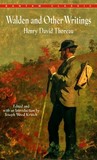 Walden and Other Writings by Henry David Thoreau
My rating: 2 of 5 stars
Thoreau gets name-dropped so often in my circle of friends and in other books I’ve read that I finally decided to read him. This collection has the important stuff – “Walden”, “Civil Disobedience” and “Life Without Principle”, as well as some other writings. And sorry, but most of it didn’t really register with me. The reason has less to do with whether I agree or disagree with his overall philosophy, and more to do with the fact that much of it seems even less relevant in 2016 than it reputedly did in the 1800s when his writings were first published – at least to me. There’s good advice here and there – and his argument that the daily newspapers are a waste of man’s intellect seems particularly prescient today – but as a life template there’s not much here for me. Even if I just take it as a straight document of Thoreau’s philosophical outlook and his Walden experiment, it’s a tough read, as his writing does have a tendency to wander off on grand, sweeping and arguably self-absorbed tangents, although he also has an uncanny ability to rope you back in with a brilliant sentence or observation. So I’m not saying it’s undeserving in its reputation as a classic work of literature, but I found it to be more rambling, pretentious and impractical than inspiring.
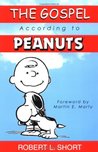 The Gospel According to Peanuts by Robert L. Short
My rating: 3 of 5 stars
I remember checking this out of the library when I was a kid, but I mainly just read the comics. Which is just as well, as the actual text – in which Robert Short explores how the Peanuts strips reflect key themes in the Gospels – would have been over my head. The Peanuts/Christianity link isn’t that big a stretch – Charles Schulz was a devout Christian whose faith played a key part in the strip’s overall theme, although never really to the point of hitting people over the head with it – so it’s not a case of Short trying to read too much into it. However, Short’s prose is a little difficult to keep up with at times, and overall I think he’s more convincing when he’s arguing that art (even comics) is a great way to convey truth indirectly to a given audience rather than arguing that Christianity and comedy have a lot in common. But that’s just me. As a thought experiment it’s very interesting. And even if you don’t buy the book’s premise, you get a lot of classic Peanuts strips for yr money. One point: this particular edition has some really bad formatting issues where the text sometimes doesn’t quite match the cartoons, and in one case cuts off the last few lines of the chapter completely. So I’d recommend getting a different edition from this one.
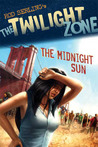 The Twilight Zone: The Midnight Sun by Mark Kneece
My rating: 3 of 5 stars
I came across this on sale in a children’s book store in my village – it’s one of a series of nine graphic novels from Walker Books adapted from select episodes of The Twilight Zone, authorized by Carol Serling and using the original scripts written by Rod Serling. In this episode, in which the Earth is getting hotter as it slowly orbits into the sun, artist Norma and her landlady Mrs Bronson struggle to survive as society collapses around them. Mark Kneece takes a couple of liberties with the story – mainly by adding a scene deleted from the original script and also imagining the visuals (illustrated by Anthony Spay) as though Serling had had the necessary budget at the time. I wouldn't say it adds anything to the original TV version (apart from the deleted scene), but in any case it’s a good story and a decent adaptation that Serling fans should appreciate.
 The Man With The Golden Arm by Nelson Algren
My rating: 4 of 5 stars
First of all, forget about the Sinatra film, because that version bears little resemblance to the source. Algren’s story of heroin addict Frankie Machine, who makes a living dealing cards at illegal poker games, is a grim portrait of drunks, shoplifters and lowlifes in a Chicago slum. Similar to Algren’s A Walk on the Wild Side, Frankie serves more as a centerpiece for Algren to showcase the variety of characters that populate his world, and wax lyrical about their dehumanized existence. Crucially, Algren pulls off a remarkable balancing act, sympathizing with his characters without glamorizing or making excuses for them, railing against the rigged system that beats people down yet holding them accountable for their own failings. Also like A Walk On The Wild Side, Algren’s lyrical writing style is both a marvel and a bit of a slog at times, so it takes some patience. But it’s worth the effort.
View all my reviews
Solid gold,
This is dF
Screwjack by Hunter S. ThompsonMy rating: 2 of 5 stars
One of the few HST books I haven’t read yet, mainly due to economics – I couldn’t see paying the full trade-paperback price for a 60-page book with three short pieces. Finally I got a cheap copy, and I have to say it was worthwhile only in that it was a fast way to put me another book ahead in my 2016 Reading Challenge. The first story, “Mescalito” – about his first experience with mescaline – is actually classic HST, but it also appears in Songs of the Doomed: More Notes on the Death of the American Dream, so if you have that you don’t need this. The other two stories are slivers of flash fiction that are visceral but not necessarily in a good way, although even here HST’s writing style remains a joy for me. But I can get it elsewhere and in better quality. By no means essential.
Twinkle, Twinkle, Little Spy by Len DeightonMy rating: 3 of 5 stars
(NOTE: My copy is entitled Catch A Falling Spy, which is the US title for the same book.) Like Spy Story, this is another of Deighton’s “nameless hero” novels that isn’t about Harry Palmer. It may not even be the same guy in in Spy Story, but it arguably doesn't matter since the main focus of the book is CIA agent Major Mickey Mann, who is working with the unnamed British agent to aid in the defection of Andrei Bekuv, a Russian scientist searching the skies for alien life who may know who is leaking classified US science documents to the Kremlin. Naturally, what appears to be a simple defection operation turns out to be something far more complicated and devious as Bekuv’s wife is also brought over and Mann and the narrating British agent chase clues on the leak that take them across the globe. Like Spy Story, it pales in comparison to the Palmer novels and the Bernard Samson series, but it’s an entertaining espionage tale nonetheless.
Walden and Other Writings by Henry David ThoreauMy rating: 2 of 5 stars
Thoreau gets name-dropped so often in my circle of friends and in other books I’ve read that I finally decided to read him. This collection has the important stuff – “Walden”, “Civil Disobedience” and “Life Without Principle”, as well as some other writings. And sorry, but most of it didn’t really register with me. The reason has less to do with whether I agree or disagree with his overall philosophy, and more to do with the fact that much of it seems even less relevant in 2016 than it reputedly did in the 1800s when his writings were first published – at least to me. There’s good advice here and there – and his argument that the daily newspapers are a waste of man’s intellect seems particularly prescient today – but as a life template there’s not much here for me. Even if I just take it as a straight document of Thoreau’s philosophical outlook and his Walden experiment, it’s a tough read, as his writing does have a tendency to wander off on grand, sweeping and arguably self-absorbed tangents, although he also has an uncanny ability to rope you back in with a brilliant sentence or observation. So I’m not saying it’s undeserving in its reputation as a classic work of literature, but I found it to be more rambling, pretentious and impractical than inspiring.
The Gospel According to Peanuts by Robert L. ShortMy rating: 3 of 5 stars
I remember checking this out of the library when I was a kid, but I mainly just read the comics. Which is just as well, as the actual text – in which Robert Short explores how the Peanuts strips reflect key themes in the Gospels – would have been over my head. The Peanuts/Christianity link isn’t that big a stretch – Charles Schulz was a devout Christian whose faith played a key part in the strip’s overall theme, although never really to the point of hitting people over the head with it – so it’s not a case of Short trying to read too much into it. However, Short’s prose is a little difficult to keep up with at times, and overall I think he’s more convincing when he’s arguing that art (even comics) is a great way to convey truth indirectly to a given audience rather than arguing that Christianity and comedy have a lot in common. But that’s just me. As a thought experiment it’s very interesting. And even if you don’t buy the book’s premise, you get a lot of classic Peanuts strips for yr money. One point: this particular edition has some really bad formatting issues where the text sometimes doesn’t quite match the cartoons, and in one case cuts off the last few lines of the chapter completely. So I’d recommend getting a different edition from this one.
The Twilight Zone: The Midnight Sun by Mark KneeceMy rating: 3 of 5 stars
I came across this on sale in a children’s book store in my village – it’s one of a series of nine graphic novels from Walker Books adapted from select episodes of The Twilight Zone, authorized by Carol Serling and using the original scripts written by Rod Serling. In this episode, in which the Earth is getting hotter as it slowly orbits into the sun, artist Norma and her landlady Mrs Bronson struggle to survive as society collapses around them. Mark Kneece takes a couple of liberties with the story – mainly by adding a scene deleted from the original script and also imagining the visuals (illustrated by Anthony Spay) as though Serling had had the necessary budget at the time. I wouldn't say it adds anything to the original TV version (apart from the deleted scene), but in any case it’s a good story and a decent adaptation that Serling fans should appreciate.
The Man With The Golden Arm by Nelson AlgrenMy rating: 4 of 5 stars
First of all, forget about the Sinatra film, because that version bears little resemblance to the source. Algren’s story of heroin addict Frankie Machine, who makes a living dealing cards at illegal poker games, is a grim portrait of drunks, shoplifters and lowlifes in a Chicago slum. Similar to Algren’s A Walk on the Wild Side, Frankie serves more as a centerpiece for Algren to showcase the variety of characters that populate his world, and wax lyrical about their dehumanized existence. Crucially, Algren pulls off a remarkable balancing act, sympathizing with his characters without glamorizing or making excuses for them, railing against the rigged system that beats people down yet holding them accountable for their own failings. Also like A Walk On The Wild Side, Algren’s lyrical writing style is both a marvel and a bit of a slog at times, so it takes some patience. But it’s worth the effort.
View all my reviews
Solid gold,
This is dF
