![[personal profile]](https://www.dreamwidth.org/img/silk/identity/user.png) defrog
defrogAnd that’s that.
For those of you keeping score, I read a total of 30 books in 2020 (including these three), which is three more than my original Goodreads Challenge of 27 books, one more than my revised target of 29 books, and roughly half the number of books I used to read in a year ten years ago.
But you know, it’s been that kind of year. Let the record show that doomscrolling can really cut into your reading time.
Still, I’ll probably keep my reading moderate in 2021 – if I learned anything this year, it’s that it’s good to take time with books rather than burn through them to meet a deadline.
Anyway, you can see the year-end stats here if that sort of thing interests you.
Otherwise, here’s how I wrapped up the year in books.
 Always Look on the Bright Side of Life: A Sortabiography by Eric Idle
My rating: 2 of 5 stars
I generally don’t read celebrity memoirs, and this reminded me just why that is. I was actually kind of keen to read this, being a fan of Monty Python, and I’d generally heard good things about it. Idle covers the bases you’d more or less expect – how he got into comedy, how Python came together, what he did after Python, etc – along with personal touches such as how he met and married his second and current wife Tania, his friendship with George Harrison, etc.
There’s not much about Python itself, which is perhaps not too surprising – that story has been told over and over 50 different ways, and Idle apparently has little to add that hasn’t already been said. More interesting is the lesser known stuff about Rutland Weekend Television, his SNL appearances, his ventures into musicals (particularly Spamalot) and other things. That said, Idle doesn't get too in-depth into those either, and spends more time listing his career accomplishments and namedropping all the famous people he’s now mates with and the fabulous trips and parties he’s been to with them over the years. I can understand it with the people he was very close to (George Harrison and Robin Williams, for example, which are two highlights of the book), but the rest seem gratuitous.
Idle is obviously proud of what he’s accomplished (particularly the success and longevity of that song), and more or less justifiably so (though he’s probably the only person on Earth who insists that Splitting Heirs is funnier than people think). Also, to be fair, he does at times seem aware of the absurdity of his own celebrity and how lucky he is. But I do wish he’d spent less time writing endless anecdotes of Famous People and more time on, say, the inner workings of Python, and the relationships he built with the members. There’s some of that here, and those are the best bits, along with the behind-the-scenes stories of his various projects. Shame there wasn’t more of that. Still, he does bill it as a “sortabiography”, so it’s not like he didn’t warn us.
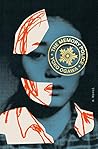 The Memory Police by Yōko Ogawa
My rating: 4 of 5 stars
This novel from Yoko Ogawa was originally published in 1994, but has only just now emerged with an English translation. The premise is deceptively simple: on an island somewhere, things are disappearing, and people are forgetting they ever existed. It starts with small things like ribbon and bells, but the list grows longer as the days go by. The mysterious Memory Police enforce the disappearances by removing the objects from people’s homes – and anyone who still remembers them. The story follows a novelist and an old man who make plans to hide her editor, “R” – who somehow still remembers everything – so that the Memory Police won't take him away.
The first thing to mention is that while this premise sounds like the set-up for a dystopian action thriller, it’s not. Rather, it’s a surrealist dystopian allegory that takes place in a world without the internet, cell phones or media of any kind – otherwise, it would be too difficult to suspend enough disbelief to buy into the idea. But Ogawa isn’t stacking the deck in her favor, or really interested in explaining how any of this works – she’s employing surrealist satire to illustrate the importance of memory, how authorities manipulate memory to control people, and how complicit or passive people can be in such situations.
Perhaps tellingly, the novel has particularly resonated with many people here in Hong Kong, where the authorities are already in the process of rewriting history (i.e. the July 21st attack by triads on protesters and innocent bystanders is now officially a “gang fight” between equally violent sides, and the 2019 protests were exclusively the work of foreign-funded terrorists) and “disappearing” things that say otherwise (books, songs, Lennon walls, Liberal Studies classes, etc). So while The Memory Police is surreal fantasy, for some of us, it’s closer to reality than it appears.
Anyway, I liked it, and I’d recommend it to anyone who likes Haruki Murakami or other Japanese writers that deal in quiet, ponderous surrealism. If you want plucky dissidents fighting totalitarianism, please visit the Hunger Games section of your local library.
 Stable Strategies and Others by Eileen Gunn
My rating: 4 of 5 stars
This is my second time reading Eileen Gunn, who probably should be far more famous than she is in SF/F circles where some of the genre’s biggest writers are fans. Then again, she’s doesn’t write much – this collection of 11 stories (plus a recipe), published in 2004, represents pretty much every short story she wrote or collaborated on since the 1970s. But when she writes one, it's generally a humdinger in terms of weird ideas.
For example, here you’ll find a bioengineering firm where employees use their own technology to climb the corporate ladder; Richard Nixon as a late-night talk show host; primary school cyberpunk; fast times at Kurt Cobain High; alien contact gone wrong from the alien’s POV; and a dimension-hopping rewrite of The Philadelphia Experiment featuring Isaac Asimov, Robert Heinlein, Grace Hopper and Nikola Tesla (the latter written as a round-robin story with Michael Swanwick, Andy Duncan, and Pat Murphy).
So Gunn may not write much, but she makes it count – she writes great, accessible prose and just about everything here works on some level. I enjoyed this even more than her other anthology I’ve read (Questionable Practices: Stories, which is also good, just not as consistently, at least for me). I’d recommend either book, but this is a great starting place, not least if you want to see Grace Hopper as a pulp sci-fi hero.
Have Gunn will travel,
This is dF
For those of you keeping score, I read a total of 30 books in 2020 (including these three), which is three more than my original Goodreads Challenge of 27 books, one more than my revised target of 29 books, and roughly half the number of books I used to read in a year ten years ago.
But you know, it’s been that kind of year. Let the record show that doomscrolling can really cut into your reading time.
Still, I’ll probably keep my reading moderate in 2021 – if I learned anything this year, it’s that it’s good to take time with books rather than burn through them to meet a deadline.
Anyway, you can see the year-end stats here if that sort of thing interests you.
Otherwise, here’s how I wrapped up the year in books.
Always Look on the Bright Side of Life: A Sortabiography by Eric IdleMy rating: 2 of 5 stars
I generally don’t read celebrity memoirs, and this reminded me just why that is. I was actually kind of keen to read this, being a fan of Monty Python, and I’d generally heard good things about it. Idle covers the bases you’d more or less expect – how he got into comedy, how Python came together, what he did after Python, etc – along with personal touches such as how he met and married his second and current wife Tania, his friendship with George Harrison, etc.
There’s not much about Python itself, which is perhaps not too surprising – that story has been told over and over 50 different ways, and Idle apparently has little to add that hasn’t already been said. More interesting is the lesser known stuff about Rutland Weekend Television, his SNL appearances, his ventures into musicals (particularly Spamalot) and other things. That said, Idle doesn't get too in-depth into those either, and spends more time listing his career accomplishments and namedropping all the famous people he’s now mates with and the fabulous trips and parties he’s been to with them over the years. I can understand it with the people he was very close to (George Harrison and Robin Williams, for example, which are two highlights of the book), but the rest seem gratuitous.
Idle is obviously proud of what he’s accomplished (particularly the success and longevity of that song), and more or less justifiably so (though he’s probably the only person on Earth who insists that Splitting Heirs is funnier than people think). Also, to be fair, he does at times seem aware of the absurdity of his own celebrity and how lucky he is. But I do wish he’d spent less time writing endless anecdotes of Famous People and more time on, say, the inner workings of Python, and the relationships he built with the members. There’s some of that here, and those are the best bits, along with the behind-the-scenes stories of his various projects. Shame there wasn’t more of that. Still, he does bill it as a “sortabiography”, so it’s not like he didn’t warn us.
The Memory Police by Yōko OgawaMy rating: 4 of 5 stars
This novel from Yoko Ogawa was originally published in 1994, but has only just now emerged with an English translation. The premise is deceptively simple: on an island somewhere, things are disappearing, and people are forgetting they ever existed. It starts with small things like ribbon and bells, but the list grows longer as the days go by. The mysterious Memory Police enforce the disappearances by removing the objects from people’s homes – and anyone who still remembers them. The story follows a novelist and an old man who make plans to hide her editor, “R” – who somehow still remembers everything – so that the Memory Police won't take him away.
The first thing to mention is that while this premise sounds like the set-up for a dystopian action thriller, it’s not. Rather, it’s a surrealist dystopian allegory that takes place in a world without the internet, cell phones or media of any kind – otherwise, it would be too difficult to suspend enough disbelief to buy into the idea. But Ogawa isn’t stacking the deck in her favor, or really interested in explaining how any of this works – she’s employing surrealist satire to illustrate the importance of memory, how authorities manipulate memory to control people, and how complicit or passive people can be in such situations.
Perhaps tellingly, the novel has particularly resonated with many people here in Hong Kong, where the authorities are already in the process of rewriting history (i.e. the July 21st attack by triads on protesters and innocent bystanders is now officially a “gang fight” between equally violent sides, and the 2019 protests were exclusively the work of foreign-funded terrorists) and “disappearing” things that say otherwise (books, songs, Lennon walls, Liberal Studies classes, etc). So while The Memory Police is surreal fantasy, for some of us, it’s closer to reality than it appears.
Anyway, I liked it, and I’d recommend it to anyone who likes Haruki Murakami or other Japanese writers that deal in quiet, ponderous surrealism. If you want plucky dissidents fighting totalitarianism, please visit the Hunger Games section of your local library.
Stable Strategies and Others by Eileen GunnMy rating: 4 of 5 stars
This is my second time reading Eileen Gunn, who probably should be far more famous than she is in SF/F circles where some of the genre’s biggest writers are fans. Then again, she’s doesn’t write much – this collection of 11 stories (plus a recipe), published in 2004, represents pretty much every short story she wrote or collaborated on since the 1970s. But when she writes one, it's generally a humdinger in terms of weird ideas.
For example, here you’ll find a bioengineering firm where employees use their own technology to climb the corporate ladder; Richard Nixon as a late-night talk show host; primary school cyberpunk; fast times at Kurt Cobain High; alien contact gone wrong from the alien’s POV; and a dimension-hopping rewrite of The Philadelphia Experiment featuring Isaac Asimov, Robert Heinlein, Grace Hopper and Nikola Tesla (the latter written as a round-robin story with Michael Swanwick, Andy Duncan, and Pat Murphy).
So Gunn may not write much, but she makes it count – she writes great, accessible prose and just about everything here works on some level. I enjoyed this even more than her other anthology I’ve read (Questionable Practices: Stories, which is also good, just not as consistently, at least for me). I’d recommend either book, but this is a great starting place, not least if you want to see Grace Hopper as a pulp sci-fi hero.
Have Gunn will travel,
This is dF
