![[personal profile]](https://www.dreamwidth.org/img/silk/identity/user.png)
Some quick reads this month to keep the momentum going. It’s all about strategy, see? Sure it is.
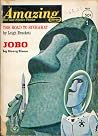 The Road to Sinharat by Leigh Brackett
My rating: 4 of 5 stars
Continuing my exploration of the works of Leigh Brackett, this 1963 novella is set on the same version of Mars as her Eric John Stark stories, in that it features the ancient island city of Sinharat, a place now considered taboo because it used to be the home of the Ramas cult, who used to practice immortality by transplanting the minds of elders into (unwilling) younger bodies. Both Sinharat and the Ramas cult were backdrops in the first EJS novella, Queen of the Martian Catacombs: Planet Stories, Summer '49, but contrary to the Goodreads tag, this is not a EJS story – Stark doesn’t appear at all, and it’s not clear where in the EJS timeline this story fits. Then again, it arguably doesn’t matter.
The protagonist this time is Dr Matthew Carey, a Martian archaeologist who works for the Rehabilitation Project, an Earth-led initiative to terraform Mars from an arid desert to a rich planet with farmable soil, plenty of water and modern cities and power. The native Martians don’t want it, but they’re getting it anyway, which has led to uprisings. Carey’s field work has led him to join the Martian side, and he is now on the run from Interpol after sabotaging the project. He plans to make a dangerous journey to Sinharat, where he believes ancient documents will show why the Martians are so opposed to change and convince Earth to abandon the project.
Of all the Brackett planetary romance stories I’ve read so far, this one is the best of the bunch – possibly because it’s less about the feudal swords-and-sorcery tropes and more of a straight adventure story, with Carey joined by his trader friend Derech and his girlfriend Arrin on the road to Sinharat whilst being chased by Interpol detective Howard Wales. The anti-colonialism angle also appeals to me, partly because of current events on Earth, and partly because it kicks hard against the Golden Age SF standard of manly imperialist conquest for the good of the “primitive” natives, and takes the point of view of the latter into consideration. Nicely done.
 Three John Silence Stories by Algernon Blackwood
My rating: 1 of 5 stars
If I ever read Algernon Blackwood before, it might have been in some ghost/horror anthology. Anyway, I sort of knew the name, and that his tales of the weird and supernatural are credited with influencing the likes of HP Lovecraft. He’s also credited with pioneering the “occult detective” genre, which brings us to this collection of three stories starring Dr John Silence, a physician with psychic training who takes on cases with apparent supernatural characteristics. His name alone convinced me to try it.
Blackwood’s collection of six John Silence stories have been published in a few different versions – this volume, as the title suggests, contains the first three stories: “A Psychical Invasion”, which involves a writer of humorous stories whose humour has deserted him due to a malevolent presence in his home; “Ancient Sorceries” tells the tale of a sleepy French village where a timid Englishman claims to have encountered shape-shifting witchcraft (the story is also the basis for the 1942 film Cat People); and “The Nemesis of Fire” finds Dr Silence investigating the appearance of smoke and spontaneous fires at an English manor house.
It all sounds promising, and yet I found myself underwhelmed, mostly because of Blackwood’s writing style – which is, shall we say, verbose. The first story in particular takes forever to get going thanks to a ton of exposition explaining his background and credentials that's crammed into an interview Dr Silence is conducting with the woman who brings him the case of the haunted humour writer. But really, all three start off super-slow, and Blackwood’s pacing instils more boredom and impatience than suspense. While that changes by the time the horror bits start, the payoff doesn't seem worth the effort it took to get there – at least for me. “Ancient Sorceries” is the best of the three, but the other two don’t set the bar all that high. And so much for John Silence. Great name, though.
 Tanner's Virgin by Lawrence Block
My rating: 2 of 5 stars
Continuing my re-read of Lawrence Block’s Evan Tanner series, his pseudo-sendup of the Bond craze in the 1960s featuring a spy who can’t sleep due to a war injury, joins hundreds of hopeless political causes, and does jobs for a super-secret agency that mistakenly thinks he’s one of their agents. This is the sixth episode, which – when I first read it in the late 80s – was titled Here Comes A Hero. (Block assures us in the afterword that this was the publisher’s idea, not his. It was renamed Tanner’s Virgin in 2005.)
The virgin in question is Phaedra Harrow, a knockout 18-year-old who Tanner is smitten with, and who lives with him for a month, after which she leaves with her virginity intact (much to Tanner’s frustration) to see the world. When Phaedra’s mother calls Tanner up and says her daughter has gone missing, he goes looking for her in London, and discovers she was scammed and sold to white slavers in Afghanistan. Naturally, he launches a one-man rescue mission, which becomes complicated because the British police are after him and a mercenary group of Russians are out to kill him because they think he’s trying to stop their plan to stage a coup in Kabul.
Most of the Tanner novels are very much of their time, and perhaps none more so than this one, in terms of its attitudes towards intentional virginity (the antithesis of the sexually liberated 60s) and sex trafficking, and the psychological impact of the latter on a woman who practiced the former until she was forced into prostitution. Block is clear that sex trafficking is a bad thing, but he deploys it as a fairly standard plot device, and IMO it's a heavy topic that doesn’t quite work with the series’ generally light tone, especially now that we live in the era of Epstein Island. It’s also kind of a retread of The Scoreless Thai in that it’s another “Tanner goes to rescue this episode’s love interest who has gone missing in the Third World” plot. Overall, it’s still a brisk read, and parts of it are absurd fun, but for me, it’s the weakest instalment in the Tanner series so far.
View all my reviews
To the rescue,
This is dF
The Road to Sinharat by Leigh BrackettMy rating: 4 of 5 stars
Continuing my exploration of the works of Leigh Brackett, this 1963 novella is set on the same version of Mars as her Eric John Stark stories, in that it features the ancient island city of Sinharat, a place now considered taboo because it used to be the home of the Ramas cult, who used to practice immortality by transplanting the minds of elders into (unwilling) younger bodies. Both Sinharat and the Ramas cult were backdrops in the first EJS novella, Queen of the Martian Catacombs: Planet Stories, Summer '49, but contrary to the Goodreads tag, this is not a EJS story – Stark doesn’t appear at all, and it’s not clear where in the EJS timeline this story fits. Then again, it arguably doesn’t matter.
The protagonist this time is Dr Matthew Carey, a Martian archaeologist who works for the Rehabilitation Project, an Earth-led initiative to terraform Mars from an arid desert to a rich planet with farmable soil, plenty of water and modern cities and power. The native Martians don’t want it, but they’re getting it anyway, which has led to uprisings. Carey’s field work has led him to join the Martian side, and he is now on the run from Interpol after sabotaging the project. He plans to make a dangerous journey to Sinharat, where he believes ancient documents will show why the Martians are so opposed to change and convince Earth to abandon the project.
Of all the Brackett planetary romance stories I’ve read so far, this one is the best of the bunch – possibly because it’s less about the feudal swords-and-sorcery tropes and more of a straight adventure story, with Carey joined by his trader friend Derech and his girlfriend Arrin on the road to Sinharat whilst being chased by Interpol detective Howard Wales. The anti-colonialism angle also appeals to me, partly because of current events on Earth, and partly because it kicks hard against the Golden Age SF standard of manly imperialist conquest for the good of the “primitive” natives, and takes the point of view of the latter into consideration. Nicely done.
Three John Silence Stories by Algernon BlackwoodMy rating: 1 of 5 stars
If I ever read Algernon Blackwood before, it might have been in some ghost/horror anthology. Anyway, I sort of knew the name, and that his tales of the weird and supernatural are credited with influencing the likes of HP Lovecraft. He’s also credited with pioneering the “occult detective” genre, which brings us to this collection of three stories starring Dr John Silence, a physician with psychic training who takes on cases with apparent supernatural characteristics. His name alone convinced me to try it.
Blackwood’s collection of six John Silence stories have been published in a few different versions – this volume, as the title suggests, contains the first three stories: “A Psychical Invasion”, which involves a writer of humorous stories whose humour has deserted him due to a malevolent presence in his home; “Ancient Sorceries” tells the tale of a sleepy French village where a timid Englishman claims to have encountered shape-shifting witchcraft (the story is also the basis for the 1942 film Cat People); and “The Nemesis of Fire” finds Dr Silence investigating the appearance of smoke and spontaneous fires at an English manor house.
It all sounds promising, and yet I found myself underwhelmed, mostly because of Blackwood’s writing style – which is, shall we say, verbose. The first story in particular takes forever to get going thanks to a ton of exposition explaining his background and credentials that's crammed into an interview Dr Silence is conducting with the woman who brings him the case of the haunted humour writer. But really, all three start off super-slow, and Blackwood’s pacing instils more boredom and impatience than suspense. While that changes by the time the horror bits start, the payoff doesn't seem worth the effort it took to get there – at least for me. “Ancient Sorceries” is the best of the three, but the other two don’t set the bar all that high. And so much for John Silence. Great name, though.
Tanner's Virgin by Lawrence BlockMy rating: 2 of 5 stars
Continuing my re-read of Lawrence Block’s Evan Tanner series, his pseudo-sendup of the Bond craze in the 1960s featuring a spy who can’t sleep due to a war injury, joins hundreds of hopeless political causes, and does jobs for a super-secret agency that mistakenly thinks he’s one of their agents. This is the sixth episode, which – when I first read it in the late 80s – was titled Here Comes A Hero. (Block assures us in the afterword that this was the publisher’s idea, not his. It was renamed Tanner’s Virgin in 2005.)
The virgin in question is Phaedra Harrow, a knockout 18-year-old who Tanner is smitten with, and who lives with him for a month, after which she leaves with her virginity intact (much to Tanner’s frustration) to see the world. When Phaedra’s mother calls Tanner up and says her daughter has gone missing, he goes looking for her in London, and discovers she was scammed and sold to white slavers in Afghanistan. Naturally, he launches a one-man rescue mission, which becomes complicated because the British police are after him and a mercenary group of Russians are out to kill him because they think he’s trying to stop their plan to stage a coup in Kabul.
Most of the Tanner novels are very much of their time, and perhaps none more so than this one, in terms of its attitudes towards intentional virginity (the antithesis of the sexually liberated 60s) and sex trafficking, and the psychological impact of the latter on a woman who practiced the former until she was forced into prostitution. Block is clear that sex trafficking is a bad thing, but he deploys it as a fairly standard plot device, and IMO it's a heavy topic that doesn’t quite work with the series’ generally light tone, especially now that we live in the era of Epstein Island. It’s also kind of a retread of The Scoreless Thai in that it’s another “Tanner goes to rescue this episode’s love interest who has gone missing in the Third World” plot. Overall, it’s still a brisk read, and parts of it are absurd fun, but for me, it’s the weakest instalment in the Tanner series so far.
View all my reviews
To the rescue,
This is dF
